







Florida Lemon Law Attorneys
You Can Get a Cash Settlement, a Replacement Car, or a Refund with Easy Lemon
The Florida Lemon Law (Fla. Stat. §681.10 to §681.118) requires manufacturers to repurchase or replace a new motor vehicle with a substantial defect after 3 repair attempts for the same defect, plus a final repair attempt after written notice or 30 cumulative calendar days (60 days for recreational vehicles) out of service. Under this statute, the manufacturer pays the consumer's attorney fees when the consumer prevails, no attorney fees unless we recover for you. Easy Lemon represents Florida drivers at every stage.

Your Florida lemon law attorney
Admitted in Florida, 1997 · The Florida Bar No. 112240
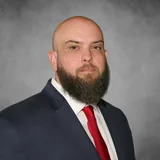
Ron Kaniuk is our Florida managing partner. Admitted in Florida in 1997, Florida Bar No. 112240, with a J.D. from St. John’s University School of Law in 1996. Florida runs on a hard clock. The manufacturer gets one final repair attempt after written notice, and when you prevail it pays your attorney fees under Fla. Stat. §681.112.
Read Ron Kaniuk’s full bio →Is Your Car a Lemon?
Your car may be a lemon if it keeps going back to the dealer or the mechanic for the same problem. Under Florida law, the defect must make the car unsafe, unreliable or worth much less. The manufacturer or dealer must also have failed to fix it after several tries.
The same noise, shaking or warning light keeps coming back.
The dealer has worked on it multiple times and the problem is still there.
Understanding Florida's Lemon Law
Florida's Lemon Law, officially the Motor Vehicle Warranty Enforcement Act, is found at Fla. Stat. §681.10 to §681.118 and sets the rules for defective new vehicles in the state.
How Florida's Lemon Law Process Works
Document Your Repairs
Ask for a repair order every time you visit a Florida dealer, even if the technician finds nothing. Under Fla. Stat. §681.10 to §681.118, these papers prove your repair attempts. Keep every receipt and work order.
Contact Easy Lemon
Send us your records. We check your repair history against Florida's statute and tell you if your car qualifies as a lemon. The consultation is free, with no obligation.
We File Your Claim
We prepare the claim and handle the paperwork. This includes any notice to the manufacturer that Fla. Stat. §681.10 to §681.118 requires.
Manufacturer Response
If Florida law gives the manufacturer a final repair attempt, it gets one. If the defect remains, Florida law entitles you to relief. Most claims then move toward settlement.
Get Compensated
You receive a refund, a replacement vehicle or a cash settlement. No attorney fees unless we recover for you.
Why Choose Us for Lemon Law?
Past Results
We've recovered over $50 million for our clients by securing refunds, cash settlements, and replacements.
Client-Centered Approach
We receive positive feedback from clients we have represented.
Fee-Shift Representation
Under Fla. Stat. §681.10 to §681.118, the manufacturer pays the consumer's attorney fees when the consumer prevails. No fee unless we recover compensation.
Focused Results
We know the stress defective vehicles bring, so we simplify the process for you.
At Easy Lemon, your success is our mission. Let us simplify the process and get you the justice you deserve.
Florida Lemon Law Results
These are actual settlements obtained by the firm for clients in Florida. Prior results do not guarantee or predict a similar outcome; every case is different. See our recent settlements page for more.
Defect: electrical/ technology
Results may vary. Prior outcomes do not guarantee a similar result. Each case is unique and depends on its specific facts and applicable law.
What The Manufacturer May Owe You
Refund
You get your purchase price back, including taxes and fees, minus any use deduction Florida law allows.
Cash Settlement
You receive a payment for the unresolved defect and keep your car.
Vehicle Replacement
You get a comparable new vehicle in place of the defective one, at no extra cost.
Meet Our Legal Team





Our lawyers are only permitted to practice law in the jurisdictions in which they are licensed or have been authorized to practice.
What Our Clients Say
About the Florida Lemon Law
Answers anchored to Fla. Stat. §681.10 to §681.118, the statute that governs lemon law claims in Florida.
Frequently Asked Questions
Still Have Questions?
Our team reviews every case individually. The fastest answer is a free consultation — no pressure, no commitment.
Get a Free Case Review →Florida Lemon Law Arbitration
The Florida New Motor Vehicle Arbitration Board is a state-run board, and a Florida lemon law claim has to go through it before any lawsuit. A case gets there after the repair history meets the statute's threshold and after the written notice described below. More in our lemon law FAQ.
The written notice comes first
The notice goes out after the third repair attempt on the same defect, under Fla. Stat. §681.104(1)(a). It is sent by registered or express mail. Certified mail does not satisfy the statute. From there the manufacturer has 10 days to respond and send the car to a reasonably accessible repair facility, then 10 more days to conform it once delivered (45 days for an RV). You'll find the address in the warranty booklet. We send this letter in every Florida case.
A state board
The state runs it. There is no manufacturer program to go through.
If arbitration does not settle it
Either side can then bring a civil lawsuit. If the consumer wins, the manufacturer pays the consumer's attorney fees. We do everything from the pre-suit notice all the way through to trial, and we don't charge any money up front for our services.
Florida Lemon Law vs Federal Magnuson-Moss
Florida law provides the repair presumption, a refund or replacement remedy, and recourse through a state board. The federal Magnuson-Moss Warranty Act (15 U.S.C. §2301) works differently. Its time limit is based on the duration of the express warranty. It applies to products sold with written warranties, so used cars often qualify. It asks for a "reasonable number" of repair attempts based on the circumstances. Federal law requires arbitration before litigation only if the written warranty makes you use a program that meets FTC rules; cases can be heard in either state or federal courts. Section 2310(d)(2) of the act specifies its own rules for attorney fees. The act can also cover defects outside the Florida lemon law period.
We review Florida cases under both laws. A 2021 Jeep Grand Cherokee L bought in Florida with only 21 miles on it made eight repair visits for battery drain, a failed liftgate module and a speaker that kept cutting out. Stellantis engineers concluded that a new radio wouldn't fix the problem. We filed under both the Magnuson-Moss Warranty Act and Florida's lemon law, and the owner kept the Jeep with a $14,000 settlement. Past results do not guarantee a similar outcome.
Florida Lemon Law: Statute-Cited Answers
What does a "reasonable number of repair attempts" look like in Florida?
Three attempts on the same defect plus a final attempt after written notice, or 30 cumulative calendar days out of service. Days from different defects add up. A new Chevrolet Corvette from Morgan Chevrolet had to go back for service four times over about seven months, first for water inside both headlamps and then for water inside the cabin. The visits lasted 23, 23, 19 and 39 days, a total of 104 days. The dealer replaced the windshield and then the seal. In June 2025 it told our client they could pick up the car or leave it at the dealership. That signaled no further repair attempts.
What do Florida lemon law attorneys need from you?
- Repair orders, including the ones where the mechanic found nothing wrong
- The purchase or lease contract, which shows the delivery date
- The warranty booklet
- Emails, texts and letters exchanged with the dealer or manufacturer
- Receipts for rentals, towing and hotel stays
Note down the date each time the issue appears and the mileage at that time. Towing and rental costs are often recoverable. It's also worth checking your VIN for recalls on the NHTSA site.
Which state court hears the case if arbitration fails?
Usually the circuit court for the county where you live or where the car was sold. In Miami-Dade that is the Circuit Court of the Eleventh Judicial Circuit; Hillsborough County (Tampa) sits in the Thirteenth, Orange County (Orlando) in the Ninth, Broward in the Seventeenth and Duval (Jacksonville) in the Fourth. Further out, Pinellas County (St. Petersburg) is the Sixth Judicial Circuit, Lee County (Cape Coral) the Twentieth, Leon County (Tallahassee) the Second, Polk County (Lakeland) the Tenth, Brevard County (Palm Bay) the Eighteenth and St. Lucie County (Port St. Lucie) the Nineteenth. Florida also has a lower court for smaller civil claims, so the amount in dispute can change where a case is filed. Federal District Court is available under Magnuson-Moss (15 U.S.C. §2310(d)(1)) when damages exceed $50,000 or party diversity permits. Which court hears a particular case still depends on its facts, the warranty issues involved and the law it is brought under.
How is the lemon law different from the UCC implied warranty?
Under the UCC, part of Florida's commercial code, implied warranties apply to sales of goods by merchants, including used cars. Merchantability under UCC §2-314 is a lower standard than the lemon law's substantial impairment standard. UCC §2-315 adds a warranty that goods will be fit for a particular purpose if you relied on the seller's advice about a specific use, say towing.
Serving Drivers Across All of Florida
Easy Lemon represents Florida consumers from Pensacola to Key West. We handle Fla. Stat. §681.10 to §681.118 cases remotely, regardless of city or county.
Florida by Manufacturer
Florida-specific manufacturer pages: notice procedure for that automaker, defect patterns by model line, and how each interacts with Fla. Stat. §681.10 to §681.118.
Chevrolet × Florida
Silverado, Tahoe, Equinox, Bolt EV: GM notice procedure, BBB AutoLine + FNMVAB §681.104 patterns, coastal-salt and humidity defect classes.
See page →Jeep × Florida
Wrangler 4xe, Grand Cherokee, Wagoneer cluster: FCA US LLC (Stellantis) notice procedure, BBB AutoLine + FNMVAB §681.104 patterns, 25V-741 battery fire and Wagoneer multi-recall outcomes.
See page →Ram × Florida
Ram 1500 / 2500 / 3500 / ProMaster: Cummins 6.7L intake heater fire (21V-798), HEMI eTorque stall (23V-265), tailgate latch (22V-904), ABS/ESC (24V-653), 2025 HD ORC (25V-882). BBB AutoLine + FNMVAB.
See page →Dodge × Florida
Charger / Challenger / Durango / Hornet / Daytona EV: Charger 24V-198 airbag rupture, Durango ABS/ESC (22V-140/24V-415), Hornet 23V-623 PHEV fire + 24V-752 brake collapse, Daytona EV 26V-262 five-FMVSS IPC blackout. BBB AutoLine + FNMVAB.
See page →Volkswagen × Florida
Atlas / Tiguan / Taos / ID.4 / Jetta / ID. Buzz: VWGoA Auburn Hills notice. Atlas airbag (22V-152) + connecting rod (22V-753), ID.4 battery (23V-040) + door handle (23V-312/24V-651), ID. Buzz FMVSS 208 seatbelt + FMVSS 105 brake warning. BBB AUTO LINE + FNMVAB.
See page →Read More Relevant Blogs
Florida Lemon Law Used Vehicle: Does It Qualify?
Florida Lemon Law can cover a used vehicle if it is still within the original 24-month Lemon Law...
Read Full Post →
Florida Lemon Law Attorney Fees: Who Pays?
Lemon Law attorney fees typically range from $400 to $600 per hour, but experienced Lemon Law attorneys usually...
Read Full Post →
How to File a Lemon Law Claim in Florida
A Florida lemon law claim has to be brought inside the Lemon Law Rights Period, which runs 24...
Read Full Post →Resolving Your Lemon Law
Case Has Never Been Easier
Our experienced attorneys handle everything — from paperwork to manufacturer negotiations. You focus on your life, we'll get you results.