








Illinois Lemon Law: New & Used Car Rights Explained

Short Answer
Illinois's state lemon law (the New Vehicle Buyer Protection Act, 815 ILCS 380) only protects buyers of NEW vehicles within the first 12 months or 12,000 miles. For used cars in Illinois, your real protection comes from the federal Magnuson-Moss Warranty Act for any car sold with a written warranty, the implied warranty of merchantability under the Illinois UCC, and the Illinois Consumer Fraud and Deceptive Business Practices Act for misrepresented condition.
Illinois also bars a licensed dealer from disclaiming the implied warranty of merchantability on most used cars for the first 15 days or 500 miles (815 ILCS 505/2L), whichever comes first. The statute of limitations runs 4 years from tender of delivery for warranty claims (810 ILCS 5/2-725) and 3 years for Consumer Fraud Act claims (815 ILCS 505/10a(e)). Our lemon law attorneys work on fee-shifting — the dealer or manufacturer can be ordered to pay your fees on a winning case.
Reviewed by Steven Nassi, Lemon Law Attorney · Easy Lemon
Dealing with a defective car is already very annoying. It gets even worse if the car is used. This is because the Illinois Lemon Law does not cover used vehicles.
The law mainly protects new car buyers during the statutory warranty period. People who buy used cars generally cannot file claims through the Lemon Law against manufacturers.
Other legal avenues such as the federal Magnuson-Moss Warranty Act, implied warranties of merchantability and the Illinois Consumer Fraud Act also let used car buyers seek justice if something goes wrong with the vehicle they buy.
At Easy Lemon, we're here to help you understand your rights when you're dealing with a defective vehicle. We're proud of our 97%* resolution rate, and our experienced Lemon Law attorneys are committed to holding manufacturers and dealers accountable and getting you the fair outcome you deserve. Contact us for a free case evaluation.
In this article, we'll cover the requirements you need to meet to file a claim under the Illinois Lemon Law, the legal protections you have as a used car buyer, and what to do if you end up with a defective used car in Illinois.
What Vehicles Are Covered Under the Illinois Lemon Law?

Generally speaking, the Illinois Lemon Law applies specifically to new cars whether they are bought or leased. This law protects passenger cars, light trucks, and vans that weigh less than 8,000 pounds as well as recreational vehicles and certain trailers.
A vehicle is considered a lemon in Illinois if a substantial defect arises within the first 12 months or 12,000 miles, whichever comes first.
The defect must impair the vehicle's use, value, or safety substantially.
Also, the motor vehicle must have undergone at least four attempts at repairs or have been out of service for a cumulative total of 30 or more business days. this protection does not extend to used cars, motorcycles, or boats.
Does Illinois Lemon Law Cover Used Cars?
The Illinois Lemon Law doesn't apply to used cars. Also known as the "Illinois New Vehicle Buyer Protection Act," this law is intended to help consumers who have recently purchased or leased cars and whose vehicles suffer from serious defects affecting usability, market value or safety.
Under this law, there is no protection for vehicles that have already been sold and resold; they lose their eligibility for claims under the Illinois Lemon Law even if other eligibility criteria are met. As soon as they pass from the original buyer to another buyer, they do not qualify for any Lemon Law claims anymore.
However, some used car buyers might still have rights under federal law, including the Magnuson-Moss Warranty Act.
Federal law applies to new and used cars that come with written warranties. If the car maker doesn't fix a defect through reasonable attempts at repairs, buyers have recourse under federal Lemon Law to seek justice.
When buying a used car in Illinois, buyers should always check implied warranties, any express warranties, and dealer guarantees to protect themselves; Illinois goes beyond many other states on this point.
Under 815 ILCS 505/2L a licensed dealer cannot disclaim the implied warranty of merchantability on most used cars for the first 15 days or 500 miles, whichever comes first, and an "as is" designation does not override that window.
Legal Protections Available for Used Car Buyers in Illinois

Although Illinois doesn't have a Lemon Law specifically for used cars, there are still other important protections at both the state and federal level that come into play if someone buys a used car and finds it defective.
Implied Warranty of Merchantability Explained
Most cars sold by dealers in Illinois carry an implied warranty of merchantability, even if it is not written in the sales contract.
This means that the car must be safe to drive and fit for normal use like reliable transportation. If a serious defect makes the vehicle unsafe or unusable, the dealer could be held responsible.
However, this warranty has a limited duration. It only covers a "reasonable" number of months or miles after the vehicle purchase, depending on the type of sale and the car's condition. Car dealers may sell a car "as-is," but they need to disclose that fact in writing.
The 15-Day / 500-Mile Powertrain Warranty a Dealer Cannot Waive
This is the protection most Illinois buyers never hear about, and it is the one that catches dealers off guard.
According to 815 ILCS 505/2L, a dealer licensed in Illinois who sells used cars at retail cannot exclude, modify or disclaim the implied warranty of merchantability during the first 15 calendar days following delivery or for the first 500 miles traveled, whichever occurs first.
An "as is" box on the Buyers Guide does not override it. An attempt to disclaim it anyway makes the purchase agreement voidable at your option.
What the warranty actually promises is narrow but useful: that the car works for ordinary transportation on public highways and is substantially free of a defect in a power train component.
Section 2L(d) details what will be included and this list is not vague: engine block, cylinder head, all internal engine parts, oil pan and gaskets, water pump, intake manifold, transmission and all internal parts of the transmission, torque converter, driveshaft, universal joints, rear axle along with its internal components and rear wheel bearings. A failing infotainment screen is not on that list. A transmission that doesn't shift gears is.
The clock is a bit more lenient than it seems: days when your car is not working don't subtract from the total of 15 and miles driven to and from the repair shop don't count towards that 500 mile limit either.
When Section 2L does not apply
- The car had more than 150,000 miles on it at the time of sale
- The title is branded "rebuilt" or "flood"
- The vehicle's gross vehicle weight rating is 8,000 pounds or more
- It is an antique or collector vehicle under the Illinois Vehicle Code
- The dealer gave you its own express warranty with coverage equal to or better than Section 2L
What it costs you, and what you have to do
You pay half the cost of the first two repairs, and the most you pay for each repair is $100. If you go back a second time with the same issue, then you're only responsible for $100 total. Beyond that, the dealer will take care of any further repairs.
The time frame is short, and it is where most of these claims fail. You need to notify the seller no later than two business days after the 15 day or 500 mile window has ended. As long as the seller gave you a cell phone number, a text message counts too.
So does a phone call to the number on your bill of sale, a letter to the address on that bill of sale, or walking in. Then the dealer gets a reasonable chance to fix the car before you move on to any other remedy under Article 2 of the UCC.
The dealer's ceiling under this section is a refund of what you paid, in exchange for the car back. It is not an open-ended repair obligation.
One more lever worth checking before you do anything else. Section 2L(h) requires your purchase agreement to carry a specific boldface statement, in 10-point type or larger, telling you the car will be free of a power train defect for 15 days or 500 miles and that you may owe up to $100 for each of the first two repairs.
If that statement is missing from your paperwork, the agreement is voidable at your option. Pull out your contract and look.
Express Warranties on Used Cars
In addition to implied protections, buyers can also get express warranties directly from manufacturers. For example, for cars that have been certified pre-owned, these warranties would come straight from the manufacturer. Dealers may also provide them if extra coverage is added at the time of sale.
Manufacturer-certified warranties often extend the original manufacturer's warranty and may cover major components such as the engine, transmission, and electrical systems.
Dealer-provided warranties can vary from short term limited coverage to longer service contracts. If there is a problem with the car within the warranty period, this warranty is enforceable and must be honored.
Illinois Consumer Fraud Act
The Illinois Consumer Fraud and Deceptive Business Practices Act protects consumers against misleading behavior from sellers. If a dealer lies about the condition of the used car, conceals something that they know is wrong with the car or falsifies information about its history, then the buyer may have legal reasons to file a claim.
For example, dealers might roll back odometers and fail to disclose that a car was previously in a major accident. They may also advertise features that the vehicle doesn't actually have.
Under this law, vehicle buyers can pursue compensation and, in some cases, recover attorney's fees. This is especially important for buyers of used cars who rely on comparable motor vehicle pricing and purchase agreements.
How Magnuson-Moss Gets Around an "As Is" Sticker
Most Illinois used-car buyers who are told "you bought it as is" stop there. Often they should not, because of one paragraph of federal law.
15 U.S.C. §2308(a) says a supplier may not disclaim or modify any implied warranty if either of two things is true. One, the supplier gives you any written warranty on the product.
Two, at the time of sale or within 90 days afterward, the supplier signs you up for a service contract. And §2308(c) drives home the point: a disclaimer that violates this section is ineffective under both the federal Act and state law.
Compare that to how a normal used-car sale in Illinois works. The salesperson checks "as is" in the Buyers Guide. Then the finance office sells you an extended service contract for 36 months right before you leave.
The service contract is what §2308(a)(2) is talking about and the "as is" disclaimer no longer does what the dealer thinks it does. Check your folder and see what you actually signed, including anything added in the 90 days after delivery.
Section 2308(b) is the fallback the other side will reach for. A written warranty of reasonable duration can limit how long implied warranties last, but only if the limit is conscionable, written in clear and unmistakable language, and displayed prominently on the face of the warranty. Limiting duration is not the same as erasing the warranty.
The $50,000 Myth
You often hear on forums that in order to file a lawsuit under Magnuson-Moss you need at least $50,000 at stake. That is a misreading. The $50,000 floor in 15 U.S.C. §2310(d)(3)(B) applies only to suits filed in federal district court under §2310(d)(1)(B).
Section 2310(d)(1)(A) allows you to sue in any court of competent jurisdiction in any state. And Illinois courts have no such threshold requirement. The only broad floor is §2310(d)(3)(A) requiring at least $25 per individual claim.
One prerequisite is real, though. Under §2310(a)(3), if the written warranty names an informal dispute settlement procedure that meets the FTC's requirements, you have to go through it before you file. Check the warranty booklet for it.
How to Handle a Defective Used Car in Illinois
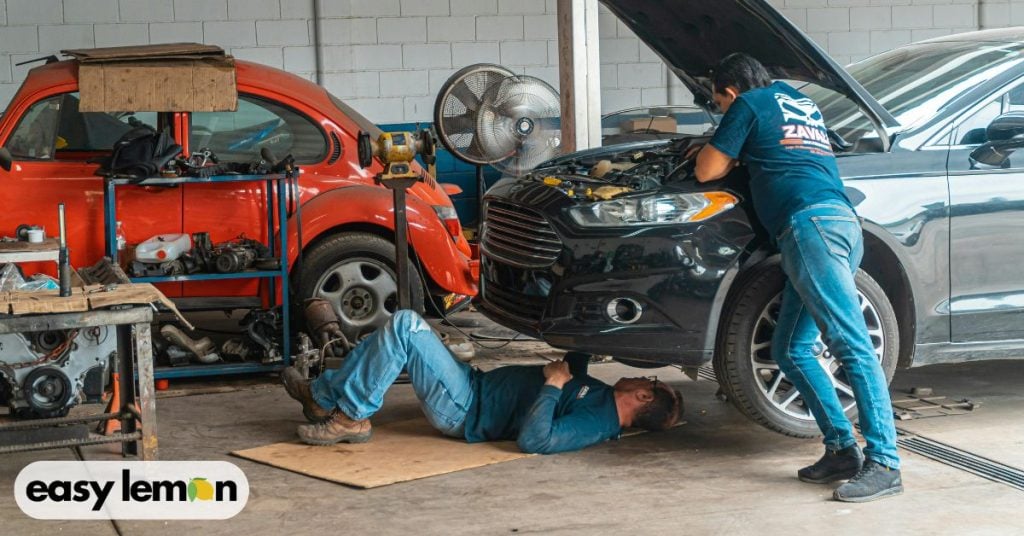
Having a used car that turns out to have defects can be frustrating and there's not much recourse under the Illinois Lemon Law because it does not cover used vehicles. Here are some things you might consider if you end up dealing with a lemon vehicle.
Dealer Repair Programs and Voluntary Warranties
Some dealers offer limited warranties or programs that they voluntarily run for used cars to attract customers. For instance, they might promise to fix major engine or transmission issues within the first 90 days.
It is important to document any promises made and not rely on spoken assurances. Also read warranties carefully before you sign them. Usually these warranties don't cover things like normal wear of parts, small repairs or damage from bad maintenance.
If you don't check carefully and confirm details of the program, you might find out only later that what was promised doesn't fit your case.
Independent Repair Options
If dealers don't offer such service programs, you could also go to an independent mechanic or repair shop. This option has benefits because you can choose someone you trust and work with them sooner rather than having to wait for availability at the dealer.
One downside is that you typically end up paying directly out of your own pocket and there's no certainty that you can get your money back from the seller. However, this option might still be very practical if the defect means the car is dangerous to drive and you need to fix things right away.
What an Illinois Used-Car Claim Is Actually Worth
"You have a claim" and "here is the number" are separate conversations. Illinois used-car cases usually resolve in one of three ways, and each has its own math.
Keep the Car, Recover the Difference
This is the default warranty remedy. Under Section 2-714(2) of the Illinois UCC (810 ILCS 5/2-714), you calculate your damages as follows: at the time and place that you accepted the car, subtract its value when delivered from its value if it were as warranted.
Let's say you bought an SUV that was three years old for $24,000 from a dealership. After two months of ownership, the transmission started having problems and a repair estimate came in at $6,300. You then have the car appraised disclosing this issue and find out it is worth $15,500.
The gap the statute measures is $8,500, not the $6,300 repair quote. The quote is evidence of the gap, not the ceiling on it.
Also, 810 ILCS 5/2-715 allows adding incidental and consequential damages where appropriate, such as towing fees, storage costs, renting another vehicle because your own was sitting idle, and costs for an independent diagnostic service.
Give the Car Back and Unwind the Deal
Revocation of acceptance under 810 ILCS 5/2-608 is the closest thing a used-car buyer has to a lemon law buyback. You revoke, the seller takes the car, and you stop paying for something you cannot drive.
Three conditions have to line up. The defect has to substantially impair the car's value to you. You must have accepted it either on a reasonable assumption the problem would get fixed, and it did not get fixed in time, or without spotting the problem at all, because it was hard to spot or because the seller talked you past it.
You need to take action within a reasonable time after you discover that something is wrong with your car or should have discovered it. Take action before the car's condition changes substantially for reasons other than the defect itself.
Revocation is not effective until you tell the seller. Driving the car for another nine months while you think about it is how this remedy gets lost.
Cash and Keep
No Illinois statute creates this one. It is a negotiated outcome: the manufacturer or dealer pays you some amount of money. You keep the car and the clean title and then the matter is closed.
Buyers pick it when the defect is livable, when the car is otherwise worth keeping, or when the branded-title hit from a repurchase would cost more than the defect does.
What the number looks like depends on the vehicle, the defect, the repair history, and what the other side thinks a jury would do. Which is why nobody can quote you an average with a straight face.
Who Pays the Attorney
Under both major routes in Illinois, fees can be awarded. 815 ILCS 505/10a(c) allows the court to order reasonable attorney fees and costs to be paid to the winning party in cases under the Consumer Fraud Act.
Under 15 U.S.C. §2310(d)(2), a consumer who finally prevails on a Magnuson-Moss claim may recover fees based on actual time expended, on top of the judgment. That is the mechanism behind a contingency arrangement in warranty work: the fee award comes from the other side, not out of your recovery.
Two honest caveats about the Consumer Fraud Act, because they change how these cases get built. First, when the defendant is a licensed new or used vehicle dealer, 815 ILCS 505/10a(a) requires proof of public injury to state a cause of action at all, shown through violation of a statute with public-interest impact, repeated conduct before yours, or a real potential for repetition.
A one-off bad sale with no pattern behind it is a harder ICFA case than buyers expect. Second, punitive damages against a vehicle dealer require willful or intentional conduct done with evil motive or reckless indifference to others' rights. Both are reasons the warranty theories usually carry the claim and the fraud count rides alongside.
One trap to know about. If your car is new rather than used and you go the state lemon law route, 815 ILCS 380/5 bars a separate cause of action under the Uniform Commercial Code once you elect to proceed and settle under that Act. Pick the theory before you sign anything.
Illinois Deadlines That End a Used-Car Claim
Different theories run on different clocks, and they do not wait for each other. The short one below is the one people miss.
| Claim | Deadline | Clock starts |
|---|---|---|
| Powertrain warranty notice to the dealer 815 ILCS 505/2L(f) | 2 business days | End of the 15-day / 500-mile period |
| Revocation of acceptance 810 ILCS 5/2-608(2) | A "reasonable time," and before the car's condition substantially changes | When you discovered the defect, or should have |
| Consumer Fraud Act 815 ILCS 505/10a(e) | 3 years | When the cause of action accrued |
| Breach of express or implied warranty 810 ILCS 5/2-725 | 4 years | Tender of delivery, or discovery if the warranty explicitly extends to future performance |
| Magnuson-Moss 15 U.S.C. §2301 et seq.; 810 ILCS 5/2-725 | Follows the state UCC period, so 4 years in Illinois | Tender of delivery |
| New Vehicle Buyer Protection Act (new cars only) 815 ILCS 380/6 | 18 months | Original delivery of the vehicle |
Note what 810 ILCS 5/2-725(2) does to the four-year window. The clock runs from tender of delivery, not from the day the car broke. A defect that surfaces in year three leaves you about a year, not four.
The exception is a warranty that explicitly extends to future performance, where the clock starts when the breach is or should have been discovered.
Parties can negotiate and shorten the time limit in the Uniform Commercial Code (UCC) down to as short as one year if they agree on this. Parties cannot lengthen this time limit. If there is some sort of limitation clause within a contract, this might actually be the real deadline.
How to Avoid a Lemon When Buying a Used Car

Before buying a used car in Illinois, you should do some due diligence to avoid being stuck with a lemon. Because the Illinois Lemon Law generally doesn't apply to used vehicles, buyers need to be proactive and careful instead.
One of the first things you should do is carefully review the vehicle's history. Reports from sources such as Carfax or AutoCheck can uncover any past accidents or other issues that might raise a big red flag right away.
Another important step is to have a trusted mechanic examine the car thoroughly before you buy it. An experienced mechanic will be able to detect hidden issues that could turn into big problems and high repair bills later.
Warranty coverage is another area that used car buyers need to pay attention to. Some used cars may still have protection from the manufacturer's original warranty, while others might come with a limited dealer warranty.
It is important to verify warranty coverage and reasonable use allowances, and to ensure that any verbal assurances are documented in writing.
Buyers should also compare the car with similar cars. They should also look at leasing costs or purchase prices for fair comparison. Also note that if the car is sold "as is" then any problems that develop in the future will be your responsibility.
Lastly, carefully review both the dealer's advertisements and the contract for the vehicle. When going through the contract, be sure to watch out for any hidden fees or terms that might limit your rights.
If you find yourself under pressure from a seller to rush into signing a contract quickly, that might suggest there's something fishy going on. By taking those precautions you can protect yourself from ending up with a defective used car.
Illinois Cases We Have Resolved
Four Illinois files, four different shapes of outcome. Each links to the full case write-up.
- Porsche Macan: $144,550. Suspension, drivetrain, electrical, and HVAC defects. Resolved under 815 ILCS 380.
- Chevrolet Traverse: $49,926. Electrical and drivetrain defects. Manufacturer repurchase.
- 2025 Kia Telluride: $36,339.97. Buyback under the Illinois New Vehicle Buyer Protection Act together with a Magnuson-Moss claim against Kia America.
- 2023 Alfa Romeo Stelvio: $17,000. Cash-and-keep settlement. The client kept the car.
Results may vary. Prior outcomes do not guarantee a similar result. Each case is unique and depends on its specific facts and applicable law. Attorney advertising. Easy Lemon® by RockPoint Law P.C.
More of them are on our recent settlements page.
Where an Illinois Used-Car Buyer Stands
The absence of protection for used car buyers under Illinois' Lemon Law can make the buying process challenging for many.
But there are also other laws at both state and federal levels that allow people who have bought defective used cars, especially if misled, to take action legally. Laws like the Magnuson-Moss Warranty Act and the Illinois Consumer Fraud Act make this possible.
Handling a lemon law claim isn't always easy and straightforward. A lawyer who deals with such cases regularly can lighten that load for you.
Easy Lemon's attorneys have 25+ years of combined experience helping drivers with defective vehicles pursue refunds, replacements, and cash settlements.
During this period, our seasoned Lemon Law attorneys have helped clients nationwide secure more than $50 million** in refunds, cash settlements, and replacement vehicles. If you believe your car is a lemon, contact us now for a free case evaluation.
FAQ
These are frequently asked questions about the Illinois used car Lemon Law:
Does the Lemon Law in Illinois Cover Used Cars?
No, Illinois doesn't have any Lemon Law protections for used vehicles. That only applies to new ones. But used cars can still get protection from other laws such as the Magnuson-Moss Warranty Act and Illinois Consumer Fraud Law.
Can You Return a Used Car If It Has Problems in Illinois?
Once you buy a used car, there aren't automatic rights to return it. The only options available to you will depend on any warranties or agreements that were in place at the time of purchase.
What Is the Mileage Limit for Lemon Laws in Illinois?
Under this law, the rules apply within the first 12 months of ownership or 12,000 miles driven, whichever happens first. There is no mileage limit for used cars because they are not subject to Illinois Lemon Law protections.
How Long Do You Have to Return a Vehicle After Purchase in Illinois?
Under Illinois Law, there's no provision that specifies how many days a buyer has to return a car after purchase. If a contract is finalized and everything is in place, the sale is legally binding unless the seller specifically agrees otherwise in writing.
A used car is not eligible for a buyback under the Illinois New Vehicle Buyer Protection Act, which covers new vehicles only.
What a used-car buyer can pursue is revocation of acceptance under 810 ILCS 5/2-608, which unwinds the sale where the defect substantially impairs the car's value to you and you act within a reasonable time of discovering it.
What Are My Rights as a Consumer When Buying a Used Car in Illinois?
Used car buyers are protected by laws that prohibit fraud and deception. The Illinois Fraud and Deceptive Practices Act requires that dealers be truthful about the condition of a vehicle when selling. If a dealer does otherwise, you are entitled to seek remedies under applicable laws.
Are There Any Recognized Organizations or Resources Related to Lemon Law in Illinois?
The Illinois Attorney General's Office offers resources for consumers and you can contact the Better Business Bureau Auto Line if you have issues regarding warranties. For additional information you might want to check out the website of the Illinois Lemon Law.
How Can I Determine If My Used Car Qualifies as a Lemon Under Illinois Law?
The Illinois Lemon Law doesn't cover used cars so they can't be classified as lemons. But if you bought a used car and the manufacturer refuses to honor any warranties that come with it, then you may have a good claim under the federal Lemon Law.
What Our Clients Say
Read More Relevant Blogs

Washington Lemon Law Attorney Fees: Who Pays?
In Washington, manufacturers pay legal fees for consumers under two circumstances, and these fees don't involve any fraction...
Read Full Post →
Colorado Lemon Law Attorney Fees: Who Pays?
Colorado has some unique rules when it comes to costs and fees compared to other states. Under Colorado...
Read Full Post →
Georgia Lemon Law Attorney Fees: Who Pays?
In Georgia, whether the manufacturer pays your attorney fees is a decision the arbitrator makes, not an automatic...
Read Full Post →Resolving Your Lemon Law
Case Has Never Been Easier
Our experienced attorneys handle everything — from paperwork to manufacturer negotiations. You focus on your life, we'll get you results.