








How Long Does a Lemon Law Buyback Take?
 By Aaron Waldo

Short Answer
There is no fixed answer, because no lemon law sets a finish date for a consumer's case. What the statutes do set are deadlines that bind the manufacturer once a proper demand has been made.
The process runs from filing the claim, through presenting repair records that prove the defect, to negotiating a refund, replacement, or settlement. A buyback refund typically returns the purchase price minus a mileage offset, plus registration fees and incidental costs such as a rental car.
Reviewed by Aaron Waldo, Lemon Law Attorney · Easy Lemon
The length of time it takes for a Lemon Law buyback varies depending on procedures in your state, the strength of your evidence, and how the manufacturer responds. No statute fixes an end date for a consumer's case.
Statutes set deadlines for manufacturers and these deadlines are given below. The process itself involves filing a claim under Lemon Law, submitting all relevant documents to prove there is a defect in the car and then negotiating with the manufacturer about getting a refund, a new car or some sort of settlement.
This can be a complicated process depending on what state you're in. Working closely with an experienced Lemon Law attorney can really help speed things up and improve your chances of getting fair compensation.
Easy Lemon is a law firm that handles complex Lemon Law cases. Our team of experienced Lemon Law attorneys works with drivers who have been stuck with defective vehicles. Schedule a free consultation today to get started.
This article gives a full guide on Lemon Law buybacks. We explain what they are, roughly how long they usually take, and what influences the timeline. We also include steps to expedite this process.
What Is a Lemon Law Buyback?
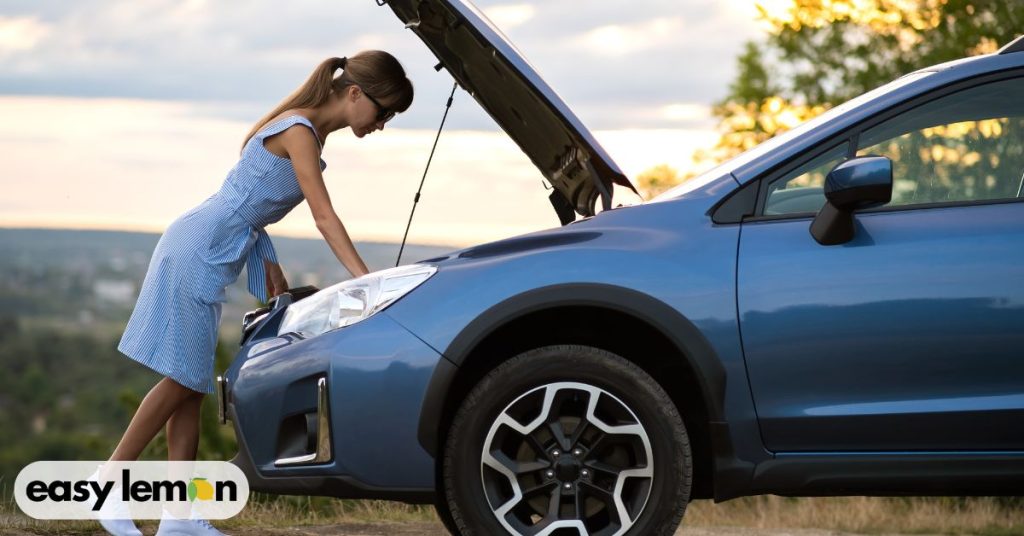
A Lemon Law buyback occurs when a car manufacturer is legally required to repurchase a vehicle that has been designated as a "lemon" under state Lemon Laws. This means that the car has been proven to have significant defects that could not be fixed despite multiple repair attempts by the manufacturer or dealers.
Lemon laws aim to safeguard consumers against purchasing cars with problems that keep coming back and affect the vehicle's safety, value, or usability.
Under state laws when a lemon car is eligible, manufacturers must refund the purchase price minus a small mileage offset for the time the car was used before the first repair attempt.
Refunds typically include registration fees and incidental costs like rental cars. Sometimes refunds also include finance charges or payments that have already been made. A buyback is not the only option for relief in a Lemon Law case: some people opt to receive a different car instead of a refund.
This means that the manufacturer replaces the defective car with a new one of similar value or same model. In other cases, the manufacturer offers a cash settlement. This way the owner keeps their old car but gets compensation for the trouble of repeated repairs.
How Long Does a Lemon Law Buyback Take?
A Lemon Law buyback follows a series of predictable steps but the length of time that each step takes is not fixed by statute. The process starts when an owner files a buyback claim with the manufacturer or dealer and provides evidence such as repair records showing that the problem persisted even after a reasonable number of repair attempts.
Getting that first packet of papers organized goes faster if you use an attorney to do so. After the claim is submitted, the manufacturer reviews it and decides if the car is eligible for a buyback.
Some respond quickly, while others take longer if more information is needed or if there are disputes about the warranty repairs.
If the company approves this buyback, there is typically some kind of negotiation process where the owner decides what they want: a refund, a new car, or cash settlement. The length of time for this negotiation phase varies depending on how quickly both sides can agree.
After reaching a settlement, paperwork is finalized and either a refund or replacement is issued. In several states, this final step is capped by statute rather than by custom; that's why the deadlines given here matter more than any sort of rough guess.
What Factors Affect the Buyback Timeline?

Certain factors directly affect the duration of a Lemon Law buyback:
- Manufacturer Cooperation vs. Resistance: If the manufacturer cooperates quickly by responding promptly to claim letters and agrees that the vehicle qualifies for a buyback, the process moves much faster. Delays frequently happen because manufacturers refuse cooperation, ask for extra repair documents or dispute the buyback price.
- State Lemon Law Requirements: Requirements under Lemon Law vary from state to state regarding how many repairs need to be done and what constitutes a major defect. Generally speaking, states with clear and straightforward rules tend to process things more quickly.
- Arbitration or Court: Arbitration and negotiation tend to settle things quicker compared to going through litigation. Going to court to collect civil penalties involves additional hearings and filing paperwork as well as dealing with court schedules.
- Volume of Claims and Backlogs: When there is a high volume of claims at any given time or if there are long backlogs in court proceedings or arbitration programs, strong Lemon Law claims can also end up delayed.
- Complexity of the Defect: Easy-to-prove defects are settled faster. Complicated or safety-related issues sometimes need more tests or expert opinions, which takes more time.
- Quality of Documentation: Having complete records and important paperwork really speeds things along. But if papers are missing or unclear, this can slow things down because the manufacturer might need additional proof.
- Legal Representation: Using an experienced Lemon Law attorney often speeds up the process of getting a buyback because that lawyer knows all about the important steps to take, when deadlines come due, and how to negotiate effectively.
- Urgency of the Defect: Cars with safety defects sometimes get priority because the risk is higher, so the manufacturer may act sooner.
- Deadlines Under the Law: In some states there is a time limit for making a Lemon Law claim. Cases nearing that deadline generally move quicker so owners do not lose their right to pursue them.
How to Speed Up the Lemon Law Buyback Process

One way to speed up the Lemon Law buyback process is to have really good evidence. That means keeping careful records about defects in your car, all your receipts for repairs and any communications you have had with the manufacturer or dealer.
It is also important to keep track of the dates of each repair attempt so that you can show clearly that the car has had a reasonable number of attempts to fix the same problem and no resolution has been found yet.
Working with an experienced Lemon Law lawyer can speed things up too. Those lawyers who deal with Lemon Law cases know what documents are required, how to negotiate with manufacturers, and how to avoid unnecessary errors and delays.
A way to avoid delays is to respond promptly to requests for information. Generally speaking, there are delays when documents or responses take too long to be shared. Keeping regular contact and checking in to see how things are going with your claim helps to keep things flowing smoothly as well.
Lastly, be open to considering different settlement options if your lawyer suggests this. Sometimes taking a lump sum payment or a replacement car instead of waiting for a full refund might shorten the timeline and still get you fair compensation.
What to Expect After a Buyback Is Approved

After a buyback is approved, the first step is usually returning the lemon car to the manufacturer or dealership. This typically means scheduling an appointment for the return and making sure all keys, documents and accessories that came along with the vehicle are also returned.
Then you will either get a refund or a new car depending on what was arranged as part of your settlement. If you receive a refund, this usually covers the purchase cost minus a small mileage offset for the time you used the car before the first substantial defect appeared.
When there is an outstanding loan or lease for a car, the manufacturer typically works directly with your lender to settle those payments. This makes sure that any balance left on the car is paid off before you receive the remaining refund.
Lastly, remember that refunds are governed by state law rather than by what the manufacturer chooses to do. Louisiana, for one, requires manufacturers to deliver refunds or replacements within 30 days after the consumer tenders title (La. R.S. 51:1945).
What deadlines does the law actually put on the manufacturer?
There is no lemon law that specifies an end date for a customer's case. Some do set firm deadlines for manufacturers though; those are the ones you should write down.
In Washington, once you send a written request to the manufacturer's office, meaning its corporate, dispute-resolution, zone or regional office, they have 40 calendar days to either replace the vehicle or issue a refund and you get to choose which option you prefer. That's according to RCW 19.118.041(1).
Louisiana law says that manufacturers have 30 days to either send refunds or replacements once the consumer has tendered title and the same 30 days after an arbitration award (La. R.S. 51:1945).
Alabama runs a shorter, earlier clock: after certified-mail notice the manufacturer has 7 calendar days to name a reasonably accessible repair facility, then no more than 14 calendar days after delivery to fix the vehicle (Ala. Code §8-20A-3(a)).
The Alaska law specifies that when someone sends a demand for a refund or replacement via certified mail, the demand asks for the refund or replacement to be delivered on the 60th day after mailing. The company has 30 days from when they receive it to try one last repair (AS 45.45.310).
Two other states have a ten-day clock for the manufacturer. New Jersey implements its lemon law through its Division of Consumer Affairs. Once the consumer's certified letter arrives, the manufacturer must complete its final repair attempt within 10 calendar days of receiving that letter (N.J.A.C. 13:45A-26; N.J.S.A. 56:12-29 et seq.).
Arkansas splits the same ten days in two: 10 days after receipt of the certified or registered notification to respond and name a reasonably accessible repair facility, then a further 10 days after delivery to conform the vehicle to the warranty (Ark. Code §4-90-406(a)(2)).
New Jersey also specifies deadlines for its own hearing process. Normally hearings occur within 20 days after applications have been accepted and ALJ initial decisions come out within 20 days of that hearing. Finally, the Director's final decision comes within 15 days of that initial decision.
What happens when the manufacturer misses its window?
Missing the deadline costs the manufacturer something. According to Louisiana law, if a company doesn't respond or fix things in time as set by statute (La. R.S. 51:1943(A)(2)), they forfeit their chance to try and fix things again. That extra chance simply goes away.
Louisiana also puts a price on long repairs: if a warranty repair takes longer than 10 working days or if this is the third visit for the same fault, then the manufacturer must reimburse daily rental costs up to $20. A violation comes with at least $200 in damages plus reasonable attorney fees (La. R.S. 51:1948(A), (C)). Under Idaho law, an arbitration decision is not binding for consumers. However, if a manufacturer wants to have a trial de novo in district court, they must file their request within 30 days. Otherwise, the court will confirm that decision against them (as per Idaho Code §48-907).
How many days out of service does it take before a vehicle is presumed a lemon?
Days in the shop are the other statutory clock, and the count is not the same in any two states. Alabama uses 30 calendar days cumulative in the manufacturer's or dealer's custody, including the final repair attempt (Ala. Code §8-20A-2(c)(2)).
Washington also uses 30 calendar days, but requires that at least 15 of them fall inside the written warranty period (RCW 19.118.041(2)(c)).
Alaska and Idaho both count 30 or more business days, which is a longer wall-clock stretch than 30 calendar days (AS 45.45.320; Idaho Code §48-903(2)).
Louisiana is the one to double-check, because older summaries still circulate the wrong number: the current statute is 45 or more calendar days, not 90 (La. R.S. 51:1943(A)(1)). None of these figures predicts when a particular claim ends. They tell you when the burden shifts.
Speed Up Your Lemon Law Buyback Process
If your car is considered a lemon under state law, you are entitled to some recourse such as a manufacturer buyback. While the buyback option can be reassuring, there are a series of steps that need to be followed correctly.
As mentioned before, there is no statute that specifies an end date for a consumer's case. How quickly things move depends very much on how quickly a manufacturer responds and also on how complicated your specific claim is. Hiring a Lemon Law attorney can help guide you through the process and reduce delays or mistakes.
Easy Lemon is a law firm with seasoned Lemon Law attorneys who help drivers of defective vehicles work through the buyback process.
Our team offers legal assistance by guiding you through every step, from gathering repair records to negotiating with the manufacturer. Initiate a buyback process by contacting us or visiting any of our offices today.
FAQs About Lemon Law Buyback Timelines
Here are a few frequently asked questions about the Lemon Law buyback and their respective answers.
How Hard Is It to Win a Lemon Law Case?
In winning a Lemon Law case, strong evidence is key. If you can prove clearly that the car has repeatedly gone through repairs but still isn't fixed properly and that this flaw really impacts how it works, its value, or safety, you have a strong case.
In that case, you may have a much higher chance of winning. Working with a qualified Lemon Law Attorney can also help improve your chances of winning.
Does a Lemon Buyback Affect Value?
Yes, cars that are called "lemons" usually get a special title that reflects that they had major problems in their past. That can lower resale value because potential buyers know there were significant issues at one time even if those have since been fixed. The effect of this varies based on how bad the flaws were and what kind of car it is.
Will a Dealership Buy Back a Lemon?
Usually the manufacturer takes care of the process for buying back vehicles. Dealerships can help with this process, but the final decision and payment usually come from the manufacturer.
If the dealership is directly involved in the sale, they might help with logistics, but the legal obligation rests with the manufacturer.
How Long Do Lemon Law Cases Take in CA?
Handling a case under California Lemon Law can take different lengths of time depending on how quickly manufacturers respond to you, whether they contest the buyback amount, and if you go through arbitration or trial. There's no law that sets an end date. Getting your repair records and other documents ready well ahead of time helps move things along smoothly.
How Much Do Lemon Law Attorneys Charge?
Fees for lawyers can vary depending on their level of experience and the complexity of the case. Also, certain lemon laws make the manufacturers pay the lawyer fees if the consumers prevail.
Alabama mandates that reasonable attorney fees be awarded as a matter of course when there is a breach (Ala. Code §8-20A-3(c)). In Louisiana consumers are entitled to receive reasonable attorney fees actually incurred if a court awards any part of a judgment in their favor (La. R.S. 51:1947).
Arizona makes fees mandatory to a prevailing consumer (A.R.S. §44-1265(B)). New York leaves fees to the court's discretion instead (N.Y. Gen. Bus. Law §198-a(l)), and the Texas Lemon Law contains no fee provision at all — in a Texas matter fee recovery runs through the federal Magnuson-Moss Warranty Act, 15 U.S.C. §2310(d)(2), or the DTPA.
What Our Clients Say
Read More Relevant Blogs

Washington Lemon Law Attorney Fees: Who Pays?
In Washington, manufacturers pay legal fees for consumers under two circumstances, and these fees don't involve any fraction...
Read Full Post →
Colorado Lemon Law Attorney Fees: Who Pays?
Colorado has some unique rules when it comes to costs and fees compared to other states. Under Colorado...
Read Full Post →
Georgia Lemon Law Attorney Fees: Who Pays?
In Georgia, whether the manufacturer pays your attorney fees is a decision the arbitrator makes, not an automatic...
Read Full Post →Resolving Your Lemon Law
Case Has Never Been Easier
Our experienced attorneys handle everything — from paperwork to manufacturer negotiations. You focus on your life, we'll get you results.