








Indiana Lemon Law: New & Used Car Rights Explained


Short Answer
Indiana's state lemon law (the Motor Vehicle Protection Act, Ind. Code §24-5-13) primarily covers NEW vehicles — a used car qualifies only if the defect was first reported within 18 months/18,000 miles of original delivery. For most used cars in Indiana, your protection comes from the federal Magnuson-Moss Warranty Act if the car came with any written warranty, the Indiana UCC's implied warranty of merchantability for non-"as-is" sales, and Indiana's Deceptive Consumer Sales Act for misrepresentation.
Like most states, Indiana has no dedicated used-car lemon law, which is why federal Magnuson-Moss is usually the strongest claim. The deadline to file is 4 years from sale for warranty claims under the state UCC. Indiana lemon law attorneys work on a fee-shifting basis — on a winning claim the court can order the dealer or manufacturer to pay your attorney's fees.
Purchasing a used car in Indiana can feel like a risky investment. Unlike new ones, used cars don't come with as many protections and that makes things harder if something goes wrong later on.
Thankfully, Indiana's Lemon Law covers used cars only in a narrow window — when the defect was first reported within 18 months/18,000 miles of original delivery. Outside that window, used-car buyers can still pursue refunds or compensation under the federal Magnuson-Moss Warranty Act and Indiana's implied warranty rules.
A proper understanding of how this law works is what separates endless repairs from real relief. This is why you might need help from a Lemon Law attorney. If your used car is still covered by warranty and continues to break down, you may have legal rights that you don't even realize exist.
Easy Lemon is a Lemon law firm that helps used car buyers push warranty claims through, fight back against stubborn dealers, and pursue refunds, replacements, or cash settlements.
Book a free consultation with one of our lemon law attorneys today so we can review your case, explain your rights, and start building a strategy for your claim.
This article covers how Indiana's Lemon Law applies to used cars, what to do if you've bought a defective vehicle, and when to contact a Lemon Law lawyer.
What Is the Indiana Lemon Law?
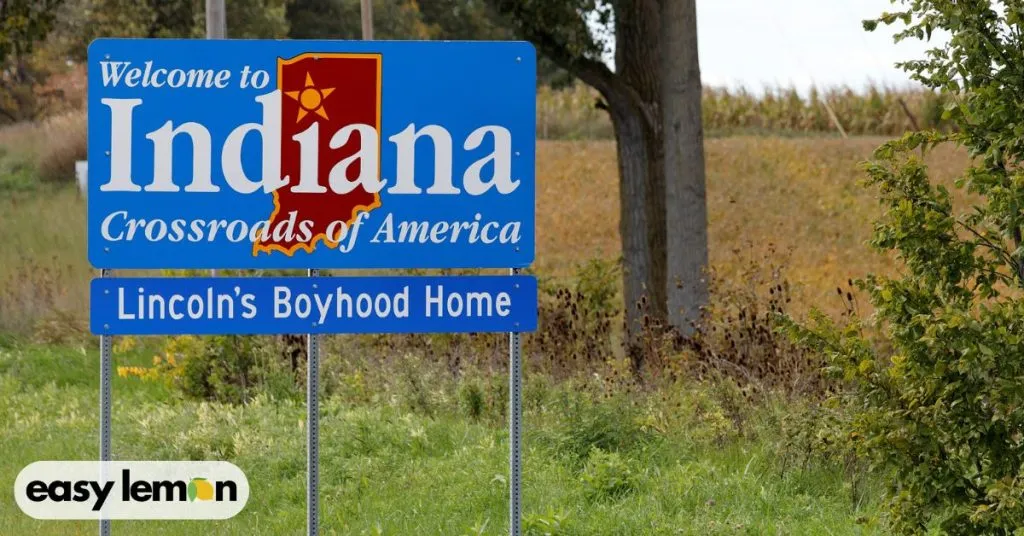
The Indiana Lemon Law is a piece of legislation designed to protect consumers and provide relief if they buy vehicles with defects made at the factory. Consumers can get either a refund or a replacement car under this law.
This law is also called the Motor Vehicle Protection Act and goes into effect when a new motor vehicle develops a recurring problem that substantially impairs its use, safety, or market value.
The problem must defy a reasonable number of attempts to fix it and must occur within the first 18,000 miles or 18 months of the vehicle's original purchase, whichever comes first.
A notable example of serious defects is the "death wobble" observed in certain Jeep models, where the front suspension violently shakes at high speeds. The Indiana Lemon Law applies only to new passenger vehicles, including cars, light trucks, and SUVs, that are sold, registered, or leased in Indiana.
However, it does not apply to motorcycles, conversion vans, farm tractors, road tractors, semi-trucks, road-building equipment, off-road vehicles, motorhomes, travel trailers, and other types of recreational vehicles.
Does Indiana Lemon Law Cover Used Cars?

Indiana does not have a dedicated used car Lemon Law. However, a used car can qualify under the state's Lemon Law only if the defect was first reported within the first 18 months or 18,000 miles from the vehicle's original delivery, whichever comes first.
Buying from a private party does not change who the lemon law claim is against: it runs against the manufacturer, and the defect must be first reported within 18 months or 18,000 miles from original delivery, whichever comes first. The implied warranty of merchantability applies only to sales by a merchant, such as a licensed car dealer. After this timeline has passed, any subsequent problems that arise with a used car cannot be addressed through the Indiana Lemon Law anymore. One common mistake people make is buying used cars from dealers based in Indiana "as-is."
That normally does waive your implied warranty coverage from the dealer. Normally. Under 15 U.S.C. §2308(a) a seller cannot disclaim implied warranties at all if it gave you a written warranty, or if it sold you a service contract at the time of sale or within 90 days after, so check what else is in your folder before you accept that answer.
However, if you're still within your car manufacturer's warranty period, you can seek relief through the Federal Lemon Law.
The Magnuson-Moss Warranty Act has more flexible requirements than the state Lemon Law. If your claim succeeds, you may get cash compensation or the seller or manufacturer may be required to fix any defects.
When Does a Used Car Qualify as a Lemon in Indiana?
As with every new or leased vehicle, the basic criteria that qualify a used car as a lemon stay the same. The used car must suffer a nonconformity or defect that persists despite a reasonable number of attempts to resolve it.
As mentioned earlier, the defect must occur within the first 18 months or 18,000 miles from delivery, whichever happens first. So any used vehicle that has passed this time period is disqualified automatically.
Under the law, four repair attempts satisfy the "reasonable number of attempts" clause. The second ground for Lemon Law qualification is if the car has been out of service for 30 business days under the 30 day lemon law Indiana rule due to repairs for any covered defect. Meeting either of those two requirements would mean your car is considered a lemon.
Issues caused directly by negligence of the car owner, failure to follow regular maintenance procedures, and unauthorized modifications to the vehicle are not covered under the state's Lemon Law. Minor things like cosmetic scratches and normal wear and tear on brake pads also don't qualify.
What to Do If You Bought a "Lemon" Used Car in Indiana

Contact an authorized dealer right away; don't wait and assume the issue will go away. Describe the problem in writing, and send an email; this way you'll have a timestamped record.
When someone promises to fix something or provide support for your car, you should get those promises in writing. If your vehicle is still covered by the original manufacturer warranty or limited dealer warranty, report the problem through that warranty. Be patient; allow them time to actually work on solving this issue.
During this time keep track of details about the problem: symptoms, when they started, how often they happen, and any visits to a service shop. Save all repair receipts, written repair orders, text messages and other documents showing that you authorized them to handle your issues.
If possible, also take pictures or videos of the issue. More proof makes your case stronger. If the same problem does not go away after four repair attempts or if the car remains nonfunctional for a total of 30 business days because of one or more defects, then you can move forward to the next step.
Before filing a Lemon law lawsuit, Indiana law requires you to send the manufacturer written notice of the defect first only if the manufacturer clearly disclosed that requirement in your warranty or owner's manual.
Not all manufacturers make this step mandatory. Check the owner's manual for the specific steps for conflict resolution. Manufacturers have thirty days to accept the defective vehicle to either replace it or fully refund your purchase price along with any finance charges.
If the manufacturer doesn't, you may go ahead and apply for arbitration. You will need to check your owner's manual to find out if they offer some kind of informal channel for resolving disputes like this.
If it does, you have to go through it first before filing a lawsuit. But remember, you are not required to abide by the arbitrator's decision; you can file a civil case if you are not satisfied with what happened in arbitration.
The compensation for a successful claim is either a total refund or a replacement vehicle with a comparable value to the defective one. You may also get a cash-and-keep settlement, depending on the relief you seek.
When leasing a car, you can either receive a refund for the full price that you have paid under the lease agreement or the rental fees if applicable. However, the manufacturer will also deduct a reasonable allowance based on the miles driven before they accept the vehicle.
If there is any trade-in vehicle involved in the transaction, your Lemon law attorney will help you strike the best deal to recover the vehicle or its monetary value.
When Should You Contact a Lemon Law Attorney in Indiana?

You need to contact a Lemon law attorney the moment you suspect that your car is a lemon. A lawyer understands the nitty-gritty of the Lemon law process in Indiana and can handle the technicalities a manufacturer or dealer may use to discredit your claim.
If you suspect your car is a lemon, the attorneys at Easy Lemon can help you understand your rights and guide you through the legal process.
If a manufacturer or dealer just ignores you or refuses to fix things or says your warranty is not valid, then hiring a lemon law lawyer makes sense. They know exactly what to say, what they need to demand and how to put pressure on them where it matters most.
If you feel swamped by paperwork and unsure about your rights and you don't want to risk a costly mistake, legal advice can help you avoid common pitfalls. A lawyer can also make sure you don't miss important deadlines for filing or accidentally give up important rights.
Many people unknowingly agree to "repurchase offers" or repair settlements that leave them worse off. An experienced lawyer can help you fight for compensation too; this could mean getting a full refund, replacing your car, or settling for something called a cash and keep where you get some money and keep the vehicle as well.
Alternative Protections for Used Car Buyers in Indiana
While not every used car sold in Indiana is covered by the state's Lemon Law, this doesn't mean buyers are left without protection. There are other laws and rules that still provide some protection for customers.
The Federal Used Car Rule requires dealers to provide a Buyers Guide on every used car they sell. This guide must clearly state whether the vehicle comes with a warranty or is being sold "as is".
If the car is covered under a warranty, the Buyers Guide needs to clearly specify which parts or systems are included, how long the warranty period lasts, and who is responsible for repair work. If it is "as is", you're buying the car with no promises, and the dealer isn't obligated to fix anything after the sale unless fraud or misrepresentation occurs.
Even if a vehicle is sold "as is", federal law may still apply. The Magnuson-Moss Warranty Act protects consumers whether they buy new or used cars and gives them warranty protection as long as there is a written warranty.
If a dealer or manufacturer doesn't live up to their warranties, the buyer has recourse through legal action and could receive reimbursement of attorney fees if they win. Dealer warranties do not cover as much as manufacturer warranties but they do still carry legal weight.
If a seller advertises or promises that something is backed by warranty, then legally they have to live up to that promise. If they don't follow through, customers may have a basis for a claim even if the car was sold used.
Documentation decides these cases, so get things in writing. Whether it's a promise about repairs, warranties, or verbal assurances that someone gives when you buy something, always have written copies. Keep copies of your sales contract, financing agreement, repair orders, and also keep any correspondence with dealers.
Without documentation, your options shrink fast. While Indiana does not have full lemon law protection for used cars beyond certain limits of time and mileage, other protections, backed by careful record-keeping, can still help if something goes wrong with a sale.
How Indiana Calculates the Refund
If your used car does fall inside Indiana's 18-month / 18,000-mile window and the manufacturer has to take it back, the number is not negotiable guesswork. Ind. Code §24-5-13-11 writes the formula out.
Start with the full contract price of the vehicle, including every credit and allowance you were given for a trade-in. Then subtract a reasonable allowance for use, which §24-5-13-11(b) defines exactly:
Total contract price × (miles the vehicle traveled before the manufacturer accepted its return ÷ 100,000)
Then add back the incidental costs §24-5-13-11(c) requires: all sales tax, the unexpended portion of any registration fee and excise tax you prepaid for the calendar year, all finance charges you actually paid, and the cost of every option the dealer added. Section 24-5-13-13 adds towing and rental costs you incurred because of the defect.
A Worked Example
Contract price of $42,000, including $4,000 credited for your trade. The odometer reads 11,400 when the manufacturer accepts the return. You paid $2,940 in sales tax, $1,180 in finance charges to date, and $610 for a rental while the car sat at the dealership.
- Use allowance: $42,000 × (11,400 ÷ 100,000) = $4,788
- $42,000 − $4,788 = $37,212
- Plus $2,940 sales tax, $1,180 finance charges, $610 rental = $41,942
Two details in that formula matter more than people expect.
First, Indiana counts miles all the way to the manufacturer's acceptance of the return — not to your first repair visit, and not to the day you filed. Every mile you drive while the manufacturer takes its time is a mile that comes out of your refund.
There's variation among states regarding this issue. Pennsylvania only counts use until the first report of a defect; they cap the deduction at 10 cents per mile or 10% of the purchase price whichever is less. New York gives you the first 12,000 miles free before its formula starts. Indiana doesn't do either.
Second, §24-5-13-10 gives you the choice, not the manufacturer. If a reasonable number of repair attempts have failed, then you choose either to get a refund or a comparable car and the manufacturer has 30 days to deliver it.
Refunds will be made to you and to your lien holder as your interests show up on the ownership records under §24-5-13-11(d). If you are still financing the car, part of that money is going to pay off the loan before any of it reaches you.
And if you win, §24-5-13-22 entitles you to recover your costs and attorney's fees, calculated on actual time expended, as part of the judgment.
The Lemon Law Runs Against the Manufacturer, Not the Dealer
This catches people out, so it is worth stating plainly. Ind. Code §24-5-13-24 says this chapter does not impose any liability on dealers and does not create any cause of action for consumers against dealers. Indiana Lemon Law is a claim against manufacturers.
That doesn't leave the dealership untouchable. That just means that there has to be some other source for a claim against the seller: breach of implied warranty of merchantability under Ind. Code §26-1-2-314, breach of express warranty given by the seller, violation of Deceptive Consumer Sales Act for misrepresentation or concealment, or violation of Magnuson-Moss Warranty Act if there is a written warranty or service agreement involved.
Different defendant, different statute, different deadline. Sorting out which one fits your paperwork is most of the early work in these cases.
Outside the Window: What the Indiana UCC Gives You
Most used cars are past 18 months and 18,000 miles from original delivery on the day they are sold. That's not where the analysis ends. It just moves the analysis to Article 2 under the Indiana Uniform Commercial Code and that's where most claims for used cars in Indiana actually go.
The Implied Warranty of Merchantability
Ind. Code §26-1-2-314 implies a warranty of merchantability into any sale by a merchant who deals in goods of that kind. A licensed car dealer is a merchant.
The standard set by the statute specifies that the goods are "fit for the ordinary purposes for which such goods are used." For a car, that means it should be able to drive. That doesn't mean it's perfect.
Ind. Code §26-1-2-316 is how a dealer tries to get out of it. To exclude the implied warranty of merchantability, the language has to mention merchantability by name, and in writing it has to be conspicuous. Buried, generic, or non-conspicuous disclaimers get challenged, and they do not always survive.
What You Can Recover
Ind. Code §26-1-2-714(2) sets the measure: the difference, at the time and place of acceptance, between what the car was worth as delivered and what it would have been worth if it had matched the warranty.
Say you bought a pickup truck from a dealer in Indiana for $19,500 and there were issues with the engine that started misfiring chronically. An appraised value considering those defects is now estimated at $12,800. The statute measures that $6,700 gap. Section 26-1-2-715 lets you add, in a proper case, both incidental and consequential damage claims including towing fees and storage costs as well as rental costs.
If the defect is bad enough that you want out of the car entirely, Ind. Code §26-1-2-608 allows revocation of acceptance where the nonconformity substantially impairs the car's value to you and you accepted it either on a reasonable assumption the problem would be cured, or without discovering it because discovery was difficult or the seller reassured you.
You need to revoke your acceptance reasonably soon after you notice there is an issue with the car or should have, before the condition of the car substantially changes due to anything other than the defect. The revocation only takes effect once you notify the seller.
Indiana's Deceptive Consumer Sales Act
If the issue isn't a broken part but a lie, such as a concealed accident, rolled-back mileage or a "certified" vehicle that has never been inspected, the claim runs under Ind. Code §24-5-0.5.
Section 24-5-0.5-4(a) lets you recover your actual damages or $500, whichever is greater, and the court may increase damages for a willful deceptive act up to the greater of three times actual damages or $1,000. The court may also award reasonable attorney's fees to the prevailing party.
Now the part that quietly kills Indiana claims. Ind. Code §24-5-0.5-5(a) requires that you give written notice to your supplier and the deadline is the soonest of three dates:
- Six months after you first discovered the deceptive act
- One year after the transaction
- Any time limit in a warranty that applies to the sale, which can be as short as 30 days
The notice needs to clearly say exactly what the dealer did and how much that cost you. Miss it and, unless the act was incurable, the claim is gone regardless of how strong the facts are. Separately, §24-5-0.5-5(b) caps the filing window at two years after the deceptive act.
This is the single biggest reason to talk to someone early rather than after a year of arguing with the dealership.
Indiana Deadlines at a Glance
| Claim | Deadline | Clock starts |
|---|---|---|
| Deceptive Consumer Sales Act: notice to the dealer Ind. Code §24-5-0.5-5(a) | Soonest of 6 months, 1 year, or a warranty period of at least 30 days | Discovery / the transaction / the warranty terms |
| Deceptive Consumer Sales Act: filing Ind. Code §24-5-0.5-5(b) | 2 years | The deceptive act |
| Indiana lemon law Ind. Code §24-5-13-23(a) | 2 years | The date you first report the defect to the manufacturer, its agent, or an authorized dealer |
| Revocation of acceptance Ind. Code §26-1-2-608(2) | A "reasonable time," before the car's condition substantially changes | When you discovered the defect, or should have |
| Breach of express or implied warranty Ind. Code §26-1-2-725 | 4 years | Tender of delivery, or discovery if the warranty explicitly extends to future performance |
| Magnuson-Moss 15 U.S.C. §2301 et seq.; Ind. Code §26-1-2-725 | Follows the state UCC period, so 4 years in Indiana | Tender of delivery |
Running an informal dispute settlement procedure tolls the lemon law's two-year clock while the procedure is under way, under §24-5-13-23(b). It does not toll anything else on this list.
Why "As Is" Is Not Always the End of It
When buying "as is" directly from a dealer in Indiana, you generally waive the implied warranties the UCC would otherwise give you. Normally. There's an exception at federal level that a lot of buyers and some dealers don't know about.
15 U.S.C. §2308(a) bars a supplier from disclaiming or modifying any implied warranty if either the supplier gives you a written warranty on the product, or the supplier signs you up for a service contract at the time of sale or within 90 days after.
Section 2308(c) then makes any disclaimer that violates the rule ineffective — not just under the federal Act, but under state law too.
Picture the ordinary version of this. The Buyers Guide on the window says "as is." You sign the papers and before you even start driving away, the finance office sells you a three-year service contract.
That contract is precisely what §2308(a)(2) describes, and the "as is" designation stops doing the work the dealer expects it to. Go through your files and look at anything you signed within three months after delivery.
Section 2308(b) allows a written warranty of reasonable duration to limit how long implied warranties run. Such limitations must be conscionable, clear and unmistakable and prominent on the face of the warranty. Shortening a warranty and deleting it are not the same thing.
You Do Not Need $50,000 to File
This one circulates constantly. The $50,000 amount-in-controversy requirement in 15 U.S.C. §2310(d)(3)(B) applies only to cases filed in federal district court under §2310(d)(1)(B).
Section 2310(d)(1)(A) lets parties sue in any court with jurisdiction in any state and there is no such threshold for Indiana state courts specifically. The only widespread floor that exists is a minimum of $25 per claim in §2310(d)(3)(A).
Fees work much as they do under state law: under §2310(d)(2), the court may allow a consumer who finally prevails to recover legal fees and other costs based on the actual time spent by their lawyer and those costs are then added onto the final judgment.
One prerequisite is genuine. Under §2310(a)(3), if the written warranty names an informal dispute settlement procedure that meets the FTC's requirements, you have to go through it before filing suit. The same is true under Ind. Code §24-5-13-19 for a procedure the Indiana Attorney General has certified.
An Indiana Case We Resolved
2025 GMC Yukon: $86,294. Purchased in Indiana with 1,223 miles on it when the claim was brought. The engine light and a reduced-engine-power warning would not clear, the dealership told the client it was replacing the engine with no timeline, and the client was covering a rental in the meantime. Resolved as a buyback.
Results may vary. Prior outcomes do not guarantee a similar result. Each case is unique and depends on its specific facts and applicable law. Attorney advertising. Easy Lemon® by RockPoint Law P.C.
More outcomes are listed on our recent settlements page.
How to Avoid Buying a Lemon Car in Indiana

One way to avoid getting a lemon car in Indiana is to do an extensive check of the used vehicle before you buy. Start out by using a checklist. Look for clear red flags such as uneven tread on tires, mismatched paint, dashboard warning lights, strange odors, or any leak beneath the car.
Make sure all lights, windows, locks, and electronic devices work well. Take your time and check them both inside and out. Request a vehicle history report from trusted sources such as Carfax or AutoCheck, and review it carefully.
Reports like these may show past accidents, flood damage, salvage titles, rolled back odometers, or frequent changes in ownership that hint at persistent issues. While a clean report doesn't mean there's nothing wrong, a poor report gives you good reason not to proceed further.
If the seller refuses to provide one, that's a red flag in itself. Take the car for a thorough test drive, ideally on both city streets and public highways. Listen for unusual noises, vibrations, or sluggish performance.
You could have a trusted independent mechanic do a pre-purchase inspection too. Lastly, read the Buyers Guide that is posted for the vehicle. Check whether you're buying the car "as is" or if it comes with a warranty.
Need an Indiana Lemon Law Lawyer?
Indiana Lemon Law aims primarily to protect Hoosiers who buy new cars and have become victims of a lemon. But you can also file under Lemon Law if there is a problem with your used car that is first reported within 18 months or 18,000 miles from original delivery, whichever occurs first.
Handling a Lemon Law claim yourself can be frustrating and difficult because there are lots of unclear qualifications and resistance from dealers. Deadlines are also very strict and confusing and this can overwhelm people. That's why it's a good idea to work with someone who has experience handling such cases.
Easy Lemon assists Indiana drivers in holding manufacturers and dealers responsible for cars that have defects. Our attorneys bring experience and a deep understanding of both state and federal warranty laws to every case. Contact us today for a free case evaluation.
FAQ
Can I Return a Used Car in Indiana?
In Indiana, if you buy a used car and the deal is finalized, you generally cannot get that car back anymore. There is no automatic return or cooling-off period either. The only exceptions would be if the dealer fails to give you the title within 31 days and also fails to send it within 10 days after you write them demanding it, or if they promised a return policy in writing.
What Does "as is" Mean Legally?
"As is" means you're purchasing the car and not getting any warranty with it. The seller isn't responsible for repairs after the sale unless they lied or hid problems.
What Are My Options If a Dealer Sold Me a Defective Vehicle?
If your car is still covered by warranty, you might be eligible for either repair service or compensation. Even if the car was sold "as is", you could still have a case if the dealer hid defects or engaged in fraud.
Can I Sue a Dealership for Selling Me a Lemon?
Yes, you can sue a dealership for selling you a lemon, but this depends on specific circumstances. If you bought a used car that was returned under a Lemon Law claim, the dealer was legally required to tell you that fact. If they kept that information from you though, you could have a good case against them now.
If the car wasn't a lemon before you owned it and then turned out to be one while you owned it, you can't use Indiana lemon law against the dealership.
Ind. Code §24-5-13-24 says the chapter imposes no liability on a dealer and creates no consumer cause of action against one, so that claim runs against the manufacturer.
A claim against the dealership itself has to come from other sources: breach of implied warranty of merchantability under Ind. Code §26-1-2-314, breach of an express warranty that they gave you, violation of the Deceptive Consumer Sales Act if there was concealment or misrepresentation involved, or claims under Magnuson-Moss if there is a written warranty or service contract involved.
What Is the Return Policy for Cars in Indiana?
Indiana doesn't generally allow returns on cars once they are purchased. If you buy a car and the dealer fails to deliver a title within 31 days, you are likely to get a refund. If you bought a new car and it turns out defective according to Lemon Law rules, you might be able to return it. But used cars can only be returned if there was some kind of fraud or a warranty issue.
Related: Pennsylvania treats used cars differently. Read what the Pennsylvania lemon law covers for used cars.
What Our Clients Say
Read More Relevant Blogs

Washington Lemon Law Attorney Fees: Who Pays?
In Washington, manufacturers pay legal fees for consumers under two circumstances, and these fees don't involve any fraction...
Read Full Post →
Colorado Lemon Law Attorney Fees: Who Pays?
Colorado has some unique rules when it comes to costs and fees compared to other states. Under Colorado...
Read Full Post →
Georgia Lemon Law Attorney Fees: Who Pays?
In Georgia, whether the manufacturer pays your attorney fees is a decision the arbitrator makes, not an automatic...
Read Full Post →Resolving Your Lemon Law
Case Has Never Been Easier
Our experienced attorneys handle everything — from paperwork to manufacturer negotiations. You focus on your life, we'll get you results.