








Most Recalled Car Brands

The most recalled car brands vary from year to year, but large manufacturers often account for the highest number of cars affected because they produce millions of vehicles.
Many modern recalls involve vehicles' operating software that can cause critical problems, including systems that may lose power while driving.
Other defects are more serious, such as faults that increase the risk of a vehicle fire, leading manufacturers to warn owners not to ignore recall notices.
Because recalls can affect millions of vehicles at once, repairs can take weeks or months to complete, and in some cases, drivers are advised to park recalled vehicles outside until the issue is fixed.
Easy Lemon is a law firm handling Lemon Law cases. Our team of Lemon Law attorneys can guide you through every step, from reviewing your purchase documents to pursuing your claim. Book a free case evaluation today.
This blog examines the most recalled car brands using NHTSA data, explaining which manufacturers have affected the most vehicles, the common defects behind major recalls, and what those findings mean for car owners.
What Is a Car Recall?
A car recall is the formal action a vehicle manufacturer takes, voluntarily or under order from the National Highway Traffic Safety Administration (NHTSA), to address a safety-related defect or a failure to meet minimum safety standards on a motor vehicle or piece of vehicle equipment.
The defect has to involve an unreasonable safety risk, and the remedy has to be made available at no cost to the vehicle owner.
NHTSA, the federal agency within the Department of Transportation that oversees motor vehicle safety, can compel a recall after an Office of Defects Investigation review and can monitor completion rates afterward.
Recalls exist to protect drivers, passengers, and other road users from injuries the manufacturer or the agency has reason to believe will occur if the defect is left in place.
Federal law backs the system with teeth. Under 49 U.S.C. § 30120, manufacturers must remedy a covered safety defect at no charge for vehicles up to fifteen calendar years from the date of first sale.
Also, failure to repair adequately within a reasonable time triggers a federal right to a replacement vehicle or refund. That backstop matters for the rest of this discussion because a high recall count is meaningful only against the free-repair guarantee that makes recall response inexpensive for owners.
By historical exposure, the Takata airbag campaign reached more than a dozen brands and remains the largest and most complex motor vehicle safety recall in U.S. history.
While large-scale recalls often dominate the headlines, in our experience reviewing vehicle defect claims, the strongest predictor of a serious legal dispute is not the existence of a recall itself but whether the defect persists after the manufacturer says it has been repaired.
Multiple unsuccessful repair attempts are often what transform a routine service issue into a potential lemon law claim.
What Causes Most Car Recalls?
Recalls cluster around a small number of vehicle systems, and the cluster has shifted noticeably over the last decade. Faulty airbags, brake systems, fuel systems, ignition switches, and seatbelt assemblies have long been the heaviest single categories.
The Takata airbag campaign, propellant degradation that could rupture an inflator and send metal fragments into the cabin, sits at the top of the list and has been linked to more than two dozen U.S. deaths.
Mechanical recalls covering crankshaft engine components, connecting rod failures that can lead to engine damage or loss of power, transmission and powertrain defects, and brake-system problems continue to generate millions of vehicles in scope each year.
The newer category is software. Modern recalls are increasingly driven by software and electronic system failures, issues with camera systems, transmission control module calibrations, infotainment, driver-assist features, high-voltage battery management on electric vehicles, and the kinds of vehicle operating software prior generations of cars never had. The leading recall category in late 2025 involved rearview cameras, often traceable to software errors.
Electrical system failures are now a leading cause of recalls across many manufacturers. The takeaway for owners is that the modern recall is as likely to arrive as an over-the-air update or a short visit for a flash as it is to require parts and labor.
What Are the Most Recalled Car Brands?
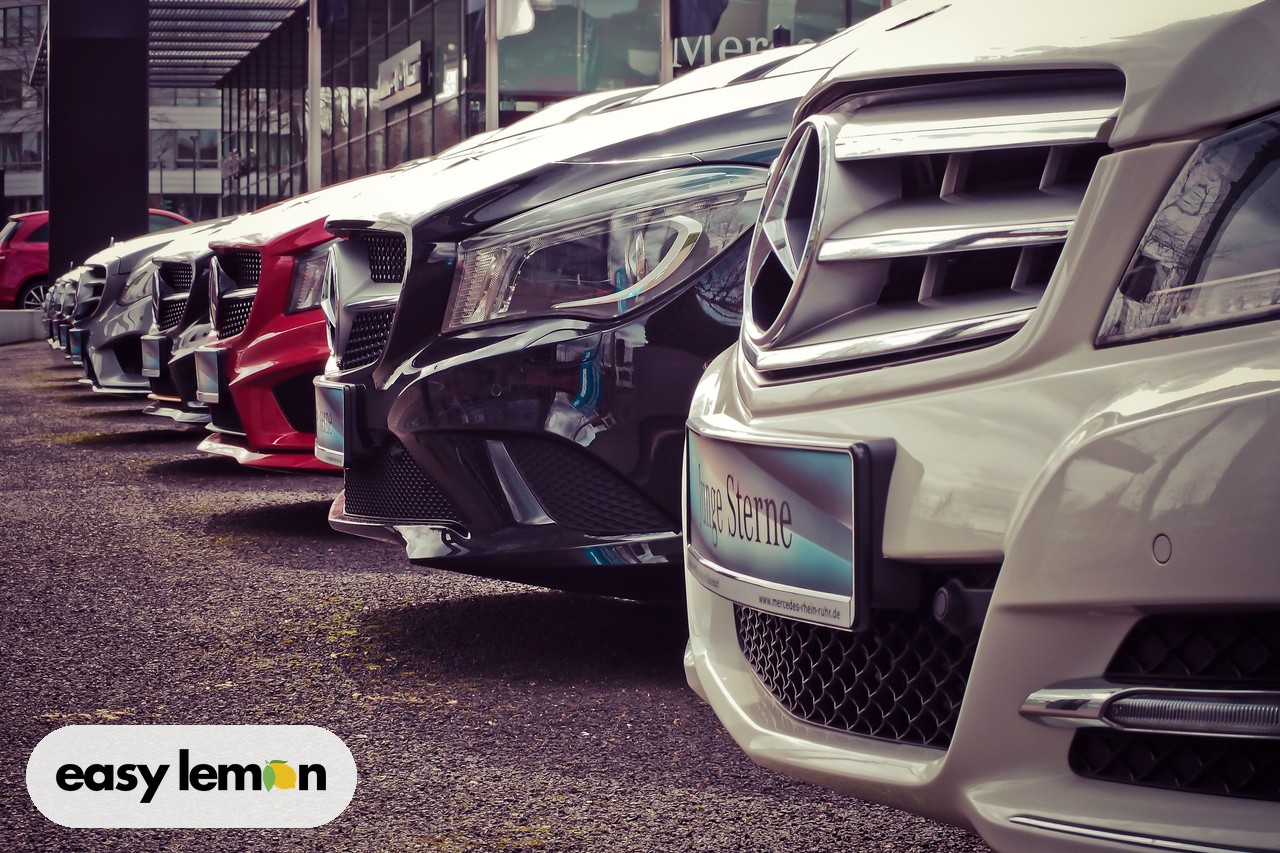
The ranking depends on what you measure, including total vehicles recalled, the number of separate recall campaigns, or projected long-term recall rate per model. Each metric tells you something different about how a brand handles safety.
The two tables below cover the 2025 picture by vehicles recalled and the long-running picture by historical exposure, and the section that follows explains where each ranking comes from.
Industry analyses of NHTSA recall data put 2025 at roughly 28 million vehicles recalled across the U.S. automotive industry.
Those figures are estimates compiled from publicly available NHTSA recall filings and industry reporting; they change as campaigns are amended and are intended to provide a broad picture of recall activity rather than a measure of overall vehicle reliability.
The largest share, by a wide margin, belonged to Ford Motor Company. The table below shows the top brands by number of vehicles affected during the year.
Ford's 2025 campaigns included a backup camera defect affecting roughly four million vehicles, fuel pump issues, seatbelt malfunctions involving seat belt buckles and seat belt assemblies on several model lines, and a string of powertrain campaigns.
Stellantis's largest 2024 categories were airbags and electrical systems, and that pattern continued into 2025.
The Jeep Grand Cherokee, the Chrysler Pacifica, and various Dodge and Ram vehicles were equipped with affected components. Tesla's recall total is smaller than its public visibility suggests in part because many of its campaigns are resolved through over-the-air software updates rather than a service visit to a local dealership.
Which Brands Have Been Most Exposed Historically?
Looking back rather than at one year, the picture spreads across more brands and is dominated by a single campaign.
The Takata airbag recall reached across more than a dozen automakers, including American Honda Motor, Ford, Stellantis predecessors Chrysler and FCA, Toyota, Nissan North America, BMW, Mazda, and several others, and remains the largest and most complex motor vehicle safety recall ever conducted in the United States.
The 2014 General Motors ignition switch recalls, which began with the Chevrolet Cobalt and grew into a broader campaign involving certain Chevrolet Silverado, Yukon XL vehicles, and GMC Sierra units, ended in a federal criminal settlement and remain the textbook case on the cost of delayed action.
Volkswagen Group's 2015 diesel emissions scandal, while handled outside the NHTSA framework as an Environmental Protection Agency matter, reshaped regulators' view of software-driven defeat devices.
The historical picture also shows that the most recalled brand is not the same as the least safe. Several manufacturers with high recall counts have built that record partly through aggressive self-reporting, flagging an issue and pulling vehicles in before NHTSA escalates.
A high recall count does not always correlate directly with poor long-term reliability, and a brand that issues fewer recalls is not necessarily building safer cars.
Which Vehicle Models Face the Most Recalls?
The brand picture is one view. The other is by individual vehicle make and model, which is what an owner actually shops for. iSeeCars publishes a long-running study that projects total lifetime recalls per model based on current campaign history, and the most recent update puts Ford vehicles at the top of the chart by a clear margin.
The iSeeCars analysis tracks recall frequency across the modern vehicle fleet and forecasts how many recalls each model is likely to face over a thirty-year lifespan. The top of the 2026 list is dominated by Ford, with twelve of the top twenty-five models coming from a single manufacturer.
On the other end of the same study, Mercedes-Benz's G-Class, SL-Class, E-Class, and CLA appear at the bottom of the projected-recall list, each forecast at roughly 0.2 lifetime recalls over the same window.
As above, a low number on one list and a high number on the other do not by themselves answer the reliability question, but it does tell an owner what to expect in terms of recall mailings over the years they keep the vehicle.
Beyond the brand-level ranking, a few individual campaigns are worth knowing because of their scale and their influence on how recalls work today.
The Takata airbag campaign, which expanded to cover roughly 100 million inflators worldwide and tens of millions of U.S. vehicles, remains the largest single safety event in U.S. recall history.
The 2014 General Motors ignition switch matter involved a switch that could move out of the run position and disable airbags in a crash, with the recall eventually covering millions of vehicles and producing a federal Deferred Prosecution Agreement.
Toyota's 2009-2010 unintended acceleration recalls reached roughly nine million vehicles. The 1971-1976 Ford Pinto fuel tank matter, while smaller in volume, remains a landmark in product liability and is studied in every law school for the way it shaped recall enforcement. These are the campaigns the modern system was built around.
How Do Recalls Affect a Brand’s Reputation and Consumer Trust?
Recalls bruise reputations, but the bruise depends much more on how a brand handles the campaign than on the raw number of vehicles involved.
Brands that respond quickly, disclosing the defect early, getting parts to dealers, communicating clearly with affected owners, and treating the recall as a chance to demonstrate accountability tend to come out of even large campaigns with their customer relationships intact.
The brands that suffer reputation damage in proportion to the recall are the ones where consumers came to believe the manufacturer knew earlier than it disclosed or kept selling unrepaired vehicles after the problem was known.
The GM ignition switch matter is the textbook example of the second pattern. A separate and counterintuitive point belongs in this discussion. A brand with a high recall count is sometimes a brand that takes safety reporting seriously.
Early self-reporting by manufacturers can lead to higher recall numbers while preventing more serious long-term failures, and a high recall count does not always correlate with poor long-term reliability.
The right reading of the data is a careful one. Look at the cause of the recalls, whether the manufacturer acted before NHTSA had to, how quickly remedies became available, and how the brand handled communication with affected car owners.
It is also worth recognizing that recalls are evidence that the safety system is functioning. Manufacturers that actively identify problems and voluntarily report them may appear worse in annual rankings than competitors that discover defects later.
For consumers, the more useful question is often not how many recalls a brand issues, but how quickly it identifies problems and how effectively it fixes them.
What Trends Are Showing up in NHTSA Recall Data?
Looking through the industry data and the multi-year picture leading into it, a few trends are visible. The first trend is size. Roughly 28 million vehicles per year have been recalled by the industry in recent years, led by a handful of high-volume manufacturers.
Second, there is the rise of software-driven recalls. Backup cameras, rearview cameras, transmission control module calibrations, and high-voltage battery management software on electric vehicles all appear in 2025 campaign counts at rates that would have been unimaginable a decade ago.
Third is the development of modern recall remedies. Over-the-air updates have allowed manufacturers, most visibly Tesla, to close out large campaigns without ever requiring an owner to visit a dealership, though that pattern is still atypical industry-wide.
The fourth trend matters for owners directly. With tens of millions of vehicles per year carrying open recall mail and roughly 58 million already on the road with at least one unrepaired safety recall as of early 2025, according to CARFAX data, the practical question for any owner is whether their specific vehicle is current.
The lookup at nhtsa.gov/recalls is the same one-minute check that always answered that question, and the answer changes over time.

Our Three-Step Recall Check Process
If you receive a recall notice, the process is usually straightforward, but a few simple steps can help protect both your safety and your legal rights.
In our experience, owners who keep good records and address recalls promptly are in a much stronger position if problems continue after the repair. At Easy Lemon, we generally recommend following a simple three-step process whenever a manufacturer issues a safety recall.
The goal is not only to get the defect fixed but also to document what happens if the repair does not solve the problem.
Step 1: Verify the recall.
Use your VIN on the NHTSA recall database to confirm whether your specific vehicle is affected.
Step 2: Complete the repair.
Schedule the free recall service with an authorized dealership and keep copies of all repair records.
Step 3: Monitor what happens afterward.
If the same problem returns or your vehicle spends extended time at the dealership, you may want to speak with a lemon law attorney about whether additional legal remedies are available.
What Does This Mean for You as a Car Owner?
The rankings above provide useful context, but the question that matters most is whether your own vehicle has an active safety recall. The easiest way to find out is to enter your VIN on the National Highway Traffic Safety Administration (NHTSA) website.
The lookup is free, and if your vehicle is covered by a safety recall, repairs are performed at no cost by an authorized dealership.
If you own one of the most recalled vehicles or a model from one of the car companies that frequently issue major recalls, whether it’s a Ford truck, a Ram 1500, a Chrysler Pacifica, or another affected vehicle, it’s worth checking your VIN regularly.
Modern recalls cover far more than traditional manufacturing defects. Many now involve vehicle operating software, electrical systems, the powertrain, service brakes, or power steering assist, any of which can directly affect safety.
Some recalls address relatively minor issues, while others involve serious hazards such as engine failure, a short circuit that could cause the vehicle to catch fire, or defects that create a significant fire risk.
In some cases, these problems have been linked to crashes and serious injuries, which is why responding promptly to a recall notice is so important.
This applies not only to passenger cars but also to commercial vehicles, SUVs such as Yukon XL vehicles equipped with recalled components, and many other vehicles impacted across different model years.
A significant number of recalls issued each year also involve other automakers, underscoring that no manufacturer is completely immune.
The more difficult situation, and one we frequently see, is when a recall repair does not actually solve the problem and the same defect returns after multiple dealer visits.
That is exactly the type of scenario federal recall law and state lemon laws were designed to address. Under federal law, if a manufacturer cannot adequately repair a safety defect within a reasonable time, owners of recalled vehicles may have the right to a replacement vehicle or a refund.
State lemon laws can provide additional remedies, including a manufacturer-funded buyback when a vehicle requires extensive repairs or spends too much time out of service.
If you believe a dealer sold you a vehicle while concealing an active recall, the issue may extend beyond lemon law into dealer misrepresentation. It also helps to know what kind of lawyer deals with car dealerships and what types of problems are covered by the lemon law before you decide how to proceed.
Need a Lemon Lawyer?
Unlike simple recall rankings, this guide combines NHTSA recall data, historical industry trends, and practical lemon-law considerations to help owners understand not only which brands issue the most recalls but also what those recalls can actually mean if a vehicle cannot be successfully repaired.
Easy Lemon is a law firm with experienced Lemon Law attorneys who can help evaluate your case, review your purchase documents, and even file a legal claim where necessary. You can walk into any of our offices or contact us directly to get started.
Frequently Asked Questions
In the process of writing this blog, we came across some recurring questions owners ask most about brand-level recall data. These are not a substitute for advice on your specific situation.
Which Car Brand Has the Highest Number of Recalls?
Ford Motor Company led the United States by a wide margin in 2025, with industry estimates of roughly 12.9 million vehicles recalled across more than 150 safety campaigns, more than Toyota, Stellantis, Hyundai, Nissan, and Subaru combined for the same year.
Rankings shift year to year and by metric, so the right answer depends on whether you are measuring vehicles affected, number of campaigns, or projected lifetime recall rate per model.
What Are Some Common Reasons for Car Recalls?
Common reasons include defective airbag assemblies, brake and fuel system defects, ignition switch failures, seatbelt buckles and assemblies that may not function properly, software errors affecting backup cameras and driver-assist systems, and powertrain problems involving connecting rod or crankshaft engine components. Modern recalls are increasingly driven by software and electronic system failures.
How Can I Check if My Car Has Been Recalled?
Enter your 17-character vehicle identification number at nhtsa.gov/recalls, the free public NHTSA database, or check the manufacturer's website using the same VIN. A local dealership can also run the lookup through its service system in a few seconds.
Are Recalls Common for All Car Brands?
Yes. Every major automaker issues recalls, and most brands have multiple campaigns in any given year. A high recall count does not always correlate with poor long-term reliability, since aggressive safety reporting by a manufacturer can produce more recalls while addressing problems earlier than a competitor that waits for NHTSA to act.
How Do Car Manufacturers Handle Recalls?
Manufacturers typically issue recalls voluntarily after identifying a safety defect through warranty data or field reports, or in response to an NHTSA investigation triggered by consumer complaints.
Federal law requires them to notify owners by first-class mail, file a remedy plan with the agency, and provide free repairs or replacements at any franchised dealer for vehicles up to fifteen years old from first sale.
Legal Disclaimer: This information does not constitute legal advice. Federal and state laws governing vehicle recalls and lemon-law remedies vary, and whether a specific situation gives rise to a claim depends on the facts and your state's statutes.
Past results do not guarantee future outcomes. The brand and model data above are drawn from publicly reported NHTSA recall figures and from third-party studies (Carfax and iSeeCars); rankings shift over time and across measurement methods. For advice about your circumstances, consult a licensed attorney in your state.
What Our Clients Say
Read More Relevant Blogs

Washington Lemon Law Attorney Fees: Who Pays?
In Washington, manufacturers pay legal fees for consumers under two circumstances, and these fees don't involve any fraction...
Read Full Post →
Colorado Lemon Law Attorney Fees: Who Pays?
Colorado has some unique rules when it comes to costs and fees compared to other states. Under Colorado...
Read Full Post →
Georgia Lemon Law Attorney Fees: Who Pays?
In Georgia, whether the manufacturer pays your attorney fees is a decision the arbitrator makes, not an automatic...
Read Full Post →Resolving Your Lemon Law
Case Has Never Been Easier
Our experienced attorneys handle everything — from paperwork to manufacturer negotiations. You focus on your life, we'll get you results.