








How to File a Lemon Law Claim in Kentucky


Short Answer
Kentucky has one of the shortest lemon law coverage windows in the country, running the earlier of 12 months or 12,000 miles from delivery.
Many owners hit that cap before logging enough repair attempts for the presumption to attach. Once the state window closes, the federal Magnuson-Moss Warranty Act picks up any vehicle still under a written manufacturer warranty, and the case shifts from state to federal ground.
Reviewed by Steven Nassi, Lemon Law Attorney · Easy Lemon
Most people reading this are already partway into the problem. The car has been back for the same fault two or three times, the dealer says they cannot replicate it, and nobody has explained what any of the paperwork is for.
Before going further, find your purchase or lease agreement and every repair order the dealer has written, including the visits where nothing was replaced. The dates and odometer readings on those orders shape a Kentucky case more than the defect itself does.
The rest of this page is organized around that timing problem. Easy Lemon works on a no-fee-unless-we-recover basis.
The state statute permits a discretionary attorney-fee award to a prevailing plaintiff, and the federal Magnuson-Moss Warranty Act has its own fee-shifting provision that often produces a manufacturer-paid recovery.
If your dealer cannot fix a defective vehicle, request a free case review. In a lemon law claim, attorneys handle the documentation, the dispute resolution filing, and the federal warranty claim when the state window closes.
This guide walks through the 1-year coverage cap, how to time the manufacturer's IDRS, and the answers to the questions Kentucky consumers ask most often.
Why Kentucky's 12-Month Coverage Window Is One of the Tightest in the Country
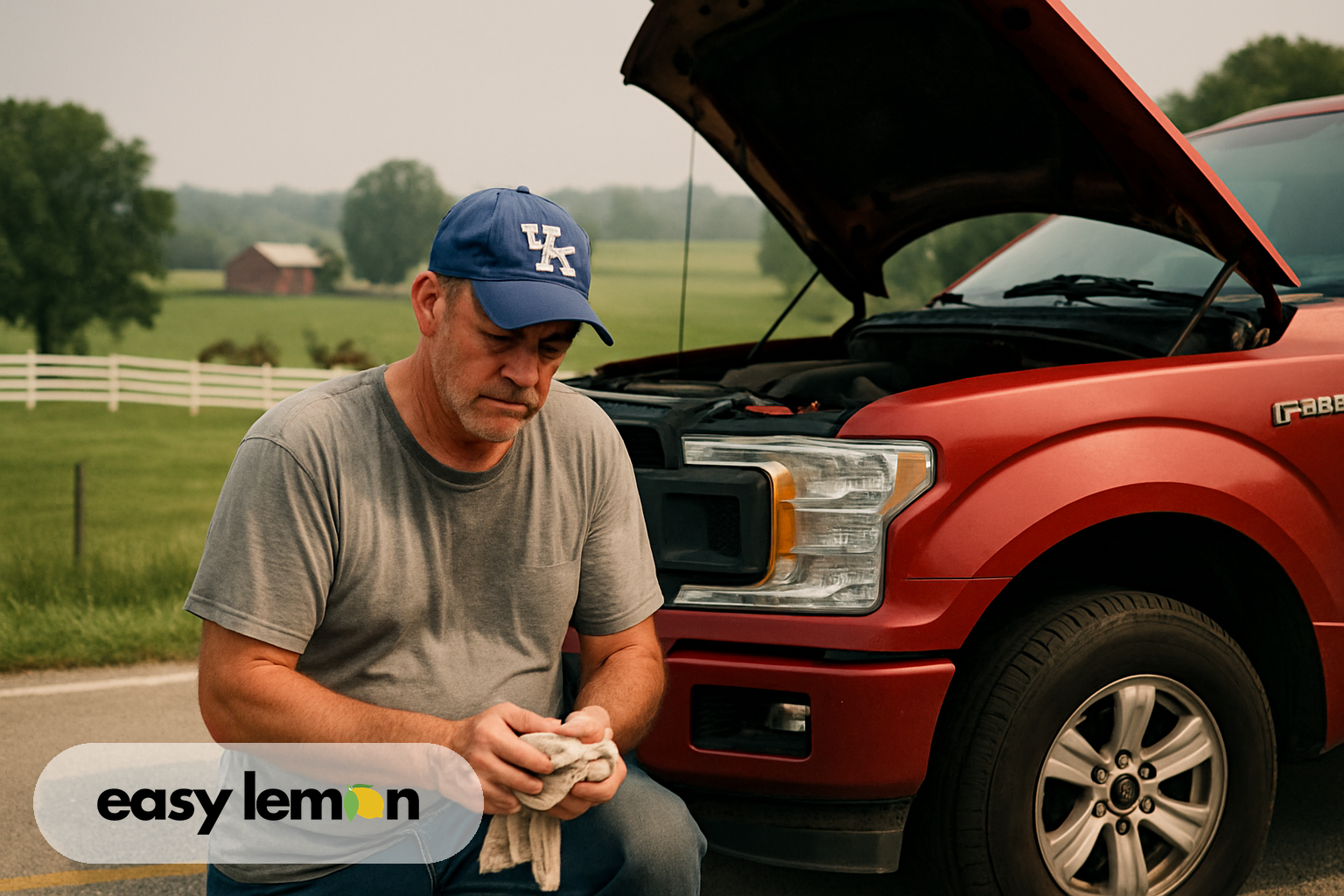
According to Natalie Nassi, Esq., Partner at Easy Lemon, "many vehicle owners remain unaware of the compensation or replacement options available under lemon law."
Kentucky's path is governed by Ky. Rev. Stat. §§ 367.840 through 367.846, and the coverage cap is the feature that defines the entire claim strategy.
The state lemon law presumption attaches only if the qualifying repair attempts or the 30 days out of service occur within the earlier of 12 months or 12,000 miles from original delivery.
Most other state lemon laws give consumers 18, 24, or even 36 months. Kentucky's 12-month ceiling means the timing pressure starts the day you take delivery.
A defect that surfaces at month 11 leaves you with one month to document the qualifying attempts before the state law route closes. The Kentucky statute covers motor vehicles primarily for highway use that are required to be registered.
It does not cover mopeds, motor homes, conversion vans, or motorcycles. For excluded vehicles, or for any vehicle whose coverage window has run out, the federal Magnuson-Moss Warranty Act (15 U.S.C. § 2310) is the alternate route.
The Repair-Attempts and Days-Out-of-Service Counts in Kentucky

Kentucky attaches the presumption in two ways. The first is four failed repair attempts on the same nonconformity within the coverage window. The second is 30 cumulative calendar days at the dealer for any nonconformity within the same window.
Both counts are cumulative across any authorized Kentucky dealer. The 4-attempts threshold is one repair attempt above the 3-attempts standard used in many other states, which means Kentucky consumers face two compounding disadvantages.
The coverage window is shorter, and the same-defect attempt count is higher. Layered together, the practical effect is that consumers have to bring the vehicle in promptly the moment a defect surfaces and avoid the gaps that pad out the timeline past the 12-month cap.
According to Natalie Nassi, the day count is where Kentucky consumers most often slip in lemon law cases. Every dealer drop-off and pickup needs to be logged the same day, because if it is not documented, it does not count toward the 30-day threshold.
In a state with one of the shortest coverage windows in the country, that documentation discipline is more decisive than in most jurisdictions.
Kentucky Lemon Law Thresholds at a Glance

The table below summarizes the procedural rails of a Kentucky lemon law claim. Each value is set by the Motor Vehicle Sales and Resales chapter of the Kentucky Revised Statutes, and each one matters for whether the presumption attaches before the coverage window closes.
Notice to the Manufacturer and the IDRS Step
Once the qualifying repair attempts or the 30-day out-of-service count has accumulated, Kentucky requires written notice to the manufacturer and completion of any informal dispute resolution system the manufacturer maintains.
In practice, that program is the manufacturer's IDRS, often run through BBB AUTO LINE or a comparable 16 CFR 703-compliant arbitration body.
The IDRS step is not optional. The Kentucky statute conditions the consumer's ability to bring a civil action on completion of the dispute resolution procedure if the manufacturer maintains one. Skipping the step or filing in court without it gives the manufacturer a procedural defense that Kentucky judges have honored.
The lemon law letter is the procedural hinge of the claim. It must identify the defect, the repair history, the days out of service, and put the manufacturer on notice that the qualifying thresholds have been met. A poorly drafted notice can be argued at the IDRS to defeat the presumption.
When the Federal Magnuson-Moss Warranty Act Becomes Your Route
Kentucky's coverage cap is what makes the federal route so important here. The federal Magnuson-Moss Warranty Act (15 U.S.C. § 2310) covers any consumer product sold with a written warranty, including motor vehicles.
The federal claim runs for as long as the manufacturer's written warranty remains active, which on most consumer vehicles is 3 to 5 years for the bumper-to-bumper warranty and longer for powertrain coverage.
That mismatch matters in Kentucky more than in most states. A defect first reported at month 14, well outside the 12-month state lemon law cap, is still inside the federal warranty window for almost every new vehicle on the market.
The Magnuson-Moss claim incorporates state warranty law for the substantive defect analysis, so Kentucky's UCC warranty provisions still apply, but the federal statute is what gives the consumer access to fee-shifting and damages.
According to Natalie Nassi, the practical strategy in Kentucky often runs both rails in parallel. If the defect surfaces inside the 12-month window, the state lemon law is the cleaner path.
If it surfaces after, Magnuson-Moss is the only path. In borderline cases close to the 12-month line, filing both is the defensive move.
Refund, Replacement, and the Kentucky Use Offset If the presumption attaches and the claim succeeds, Kentucky's lemon law gives the consumer the choice between a refund and a replacement.
The refund is the full purchase price plus collateral charges, less a reasonable allowance for use based on the miles driven before the first repair attempt for the defect.
The replacement is a comparable new vehicle of the same make, model, and equivalent options. The Kentucky use-offset formula does not have a statutory cap. That is different from the consumer-friendly caps in some neighboring states.
The offset is computed on the miles you drove before the defect was first reported, not the miles at the time of the buyback, so prompt reporting and prompt repair-order documentation directly reduce the manufacturer's offset.
Under Ky. Rev. Stat. § 367.842, the court may award reasonable attorney's fees to a prevailing plaintiff.
The award is discretionary rather than mandatory, but in practice the federal Magnuson-Moss fee-shifting provision often controls if the case includes a parallel federal claim, and Magnuson-Moss fees may be allowed by the court on a prevailing claim.
Vehicles the Kentucky Statute Excludes
Be honest about the limits before you file. The Kentucky statute does not apply to:
- Mopeds and motorcycles
- Motor homes
- Conversion vans
- Vehicles where the defect was caused by accident, abuse, neglect, or unauthorized modification
- Defects that do not substantially impair the use, market value, or safety of the vehicle If your vehicle falls outside the Kentucky statute, or the 12-month coverage window has closed, federal Magnuson-Moss warranty law is your route. Easy Lemon handles those cases as parallel claims when the state lemon law does not cover the vehicle or the timing.
Need Help Filing a Kentucky Lemon Law Claim?
You can complete the manufacturer's IDRS on your own. The procedure is meant to be accessible to consumers without counsel.
Manufacturers are almost always represented by counsel at the IDRS hearing, especially when the claim is close to the 12-month coverage cap and the manufacturer can argue the timing as a defense.
Easy Lemon, operated by RockPoint Law P.C., works on a no-fee-unless-we-recover basis.
A claim turns on the day count, the notice and IDRS submission, and a parallel federal Magnuson-Moss claim when the state coverage window has closed. The firm has recovered more than $50 million** for clients.
For a free consultation, call 855-43-LEMON or schedule online through our intake form. There is no cost to find out whether you have a case. If you do, we tell you. If you do not, we tell you that too.

Kentucky Lemon Law: Frequently Asked Questions
The questions below come up most often when Kentucky consumers call Natalie Nassi and the Easy Lemon team. Each answer points back to the statute provision or federal rule that controls.
What if my Kentucky lemon law coverage period has expired?
Kentucky's coverage runs for the earlier of 12 months or 12,000 miles. After that, the federal Magnuson-Moss Warranty Act takes over for any vehicle still covered by a manufacturer's written warranty.
Magnuson-Moss has its own fee-shifting provision, so consumers can still pursue defects discovered after the Kentucky window closes.
Why is Kentucky's coverage window so short?
The Kentucky legislature set the cap at 1 year or 12,000 miles when the statute was enacted, and it has not been updated as longer windows became standard in other states.
The practical effect is that Kentucky consumers have to act faster on a defect than consumers in 24-month states. Documenting every dealer visit on the day it happens is the discipline that protects the claim.
Does Kentucky's lemon law cover motorcycles?
No. The Kentucky statute excludes motorcycles, mopeds, motor homes, and conversion vans. For those vehicles, the federal Magnuson-Moss Warranty Act is the route while the manufacturer's written warranty is still active.
How does the 2-year filing deadline interact with the 12-month coverage cap?
The coverage cap and the filing deadline are two different clocks. The 12-month coverage period sets the window in which the qualifying repair attempts or out-of-service days have to occur.
The 2-year filing deadline runs from original delivery and sets the deadline by which the lawsuit or arbitration claim has to be filed. Both clocks have to be tracked.
Do I have to complete IDRS arbitration before going to court in Kentucky?
Yes, if the manufacturer maintains an informal dispute resolution system. Kentucky conditions the civil remedy on completion of the manufacturer's IDRS where one exists.
Most major manufacturers maintain a 16 CFR 703-compliant program, often through BBB AUTO LINE. Reviewed by Natalie Nassi, Esq., Partner, Easy Lemon (RockPoint Law P.C.).
This article is for general information only and is not legal advice. Reading it does not create an attorney-client relationship between you and Easy Lemon or RockPoint Law P.C. Kentucky lemon law cases turn on specific facts and on the version of the statute in effect at the time of your purchase.
For advice on your specific situation, contact Easy Lemon for a free consultation. Past results discussed do not guarantee a similar outcome. Every case is different.
What Our Clients Say
Read More Relevant Blogs

Washington Lemon Law Attorney Fees: Who Pays?
In Washington, manufacturers pay legal fees for consumers under two circumstances, and these fees don't involve any fraction...
Read Full Post →
Colorado Lemon Law Attorney Fees: Who Pays?
Colorado has some unique rules when it comes to costs and fees compared to other states. Under Colorado...
Read Full Post →
Georgia Lemon Law Attorney Fees: Who Pays?
In Georgia, whether the manufacturer pays your attorney fees is a decision the arbitrator makes, not an automatic...
Read Full Post →Resolving Your Lemon Law
Case Has Never Been Easier
Our experienced attorneys handle everything — from paperwork to manufacturer negotiations. You focus on your life, we'll get you results.