








How to File a Lemon Law Claim in Colorado
 By Aaron Waldo

Short Answer
Colorado lemon law thresholds now depend on your purchase date, because SB24-192 rewrote the statute in August 2024.
For vehicles bought on or after August 7, 2024, the standard repair-attempt count drops from four to three, defects likely to cause death or serious bodily injury trigger at two attempts, and the filing deadline runs 30 months from delivery. Earlier purchases follow the prior rules.
Reviewed by Aaron Waldo, Lemon Law Attorney · Easy Lemon
Colorado rewrote its lemon law in August 2024, and the date on your bill of sale now decides which set of thresholds applies to your case.
SB24-192 lowered the standard repair-attempt count from four to three, added a two-attempt trigger for safety-related defects, and stretched the filing deadline to 30 months from delivery. Vehicles purchased before August 7, 2024 are still governed by the prior version of Colo. Rev. Stat. §§ 42-10-101 through 42-10-110.
Easy Lemon works on a no-fee-unless-we-recover basis. Under Colo. Rev. Stat. § 42-10-103, the court must award reasonable attorney's fees to the prevailing side, so a consumer who wins recovers fees from the manufacturer, and a consumer who loses can be ordered to pay the manufacturer's fees.
If your dealer cannot fix a defective vehicle, request a free case review and our team will tell you whether you have a claim. The key steps are the certified-mail notice, the BBB AUTO LINE filing, and the 30-month deadline math.
This guide walks through what SB24-192 changed, how the safety-defect path works, the certified-mail notice mechanics, and the questions Colorado consumers ask most often.
What SB24-192 Changed for Colorado Buyers After August 2024
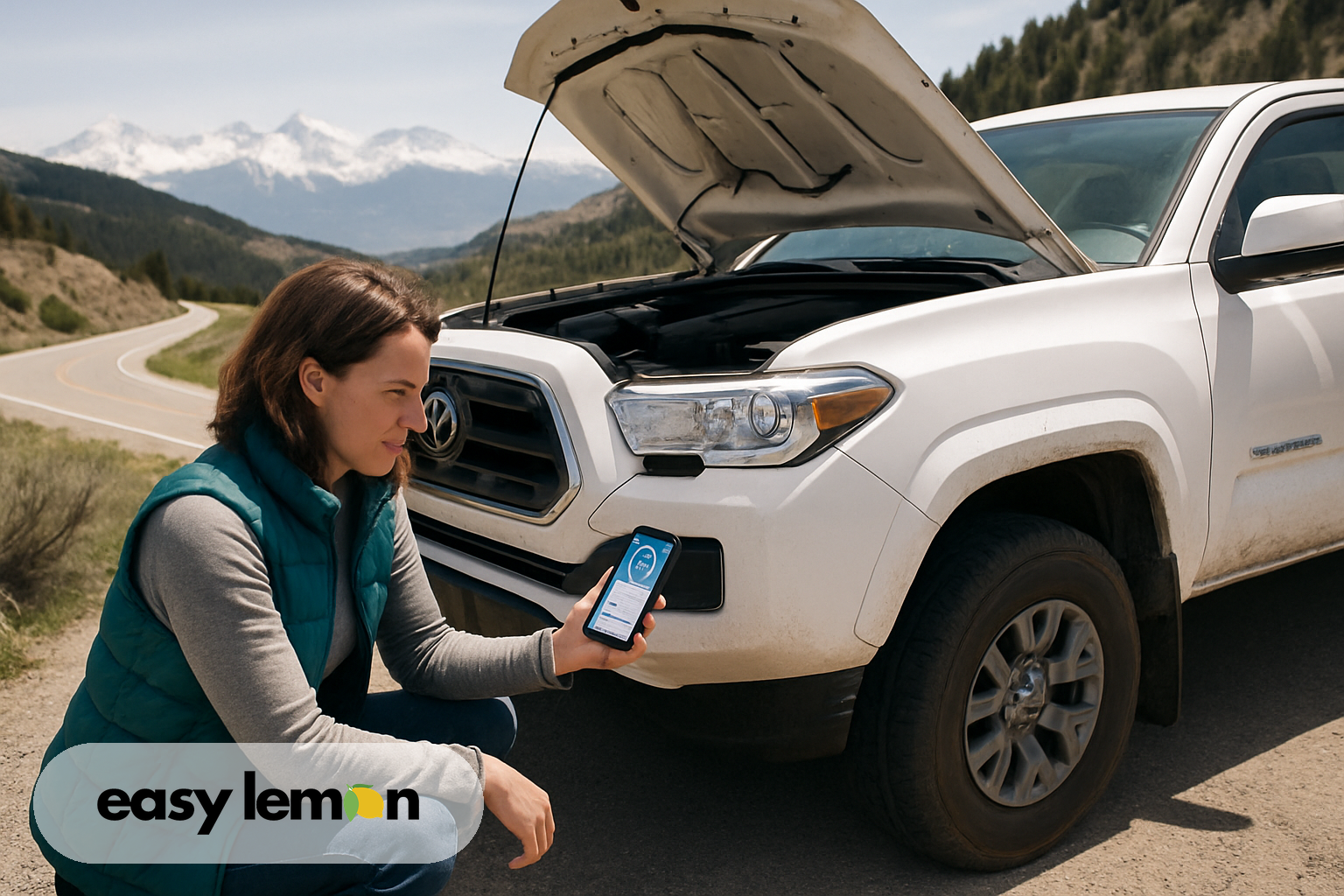
According to Natalie Nassi, Esq., Partner at Easy Lemon, "many vehicle owners remain unaware of the compensation or replacement options available under lemon law."
SB24-192 makes that gap more pronounced in Colorado, because most buyers have not seen the new rules. The statute, codified at Colo. Rev. Stat. §§ 42-10-101 through 42-10-110, is the backbone of the strengthened framework.
The four headline changes are these. The standard repair-attempt count dropped from four to three. A separate two-attempt trigger now applies to safety-based nonconformities.
The statute of limitations changed from the earlier of 6 months after the warranty expires or 1 year from original delivery to 30 months from original delivery. And the statute requires a "Lemon Law Buyback" decal on the B-pillar of any vehicle the manufacturer repurchases.
If you took delivery before August 7, 2024, the prior version controls and the older four-repair threshold applies. After that date, the strengthened law applies and the two-attempt safety path is available.
The Two-Attempt Safety Trigger and What Counts as a Safety Defect

The new two-attempt trigger is the most consequential procedural change. Before SB24-192, safety defects went into the same four-attempt bucket as everything else. The new rule reduces that to two repair attempts when the defect is one likely to cause death or serious bodily injury.
What qualifies as a safety defect is a fact question, but the categories that recur in Colorado cases include brake failures, steering loss, unintended acceleration, airbag deployment defects, fuel system fires, and electrical defects that disable safety systems.
The repair order language matters, because what the dealer technician writes down is what the manufacturer's counsel will argue from later. Vague entries like "customer complaints of noise" do not preserve a safety claim.
According to Natalie Nassi, the safety-defect path closes one of the gaps that previously cost Colorado consumers their strongest procedural ground. A failing brake defect that recurs after one repair attempt now puts the manufacturer on a tight clock.
How Colorado Counts Repair Attempts and Out-of-Service Days

Colorado's day count is cumulative across any authorized Colorado dealer, not just the one where you bought the car.
The new threshold is 24 business days under SB24-192, and the prior 30-business-day count still applies to pre-August-2024 purchases.
The cure window after written notice is 10 business days, and it counts as one of the qualifying repair attempts. That is a procedural detail that changes the math.
If you have already had two failed repairs on the same defect under the new statute, the manufacturer's cure attempt becomes the third, and a failed cure is what flips the presumption.
The statutory thresholds are summarized below, with values for the post-SB24-192 framework. Pre-August-2024 purchases use the older numbers, and the date of your purchase decides which row applies.
Sending Certified-Mail Notice to the Manufacturer
Once the repair-attempt or day-count threshold is met, Colorado requires written notice by certified mail to the manufacturer's designated address. Not to the dealer.
The certified-mail tracking number is the procedural anchor that the rest of the case rests on, because the manufacturer's 10-business-day cure window starts on the date the notice is delivered.
The notice tells the manufacturer the defect, the repair history, the dates and mileage of each attempt, and the dealer or dealers involved.
It gives the manufacturer the statutory opportunity to direct you to a specific repair facility and attempt one final cure within 10 business days. If the cure fails, or the manufacturer ignores the notice, the lemon law presumption attaches.
Skipping the notice and going straight to filing is a common reason Colorado consumers lose otherwise winnable cases. The lemon law letter is the procedural hinge.
Filing Through BBB AUTO LINE or Colorado Court

If the manufacturer operates an informal dispute settlement program that follows federal FTC rules, typically BBB AUTO LINE, you generally have to use it before filing in court. The program's decision is non-binding on you, so you can reject it and proceed to court.
There is no filing fee at BBB AUTO LINE, and the program is administered under federal 16 CFR Part 703 standards.
If the manufacturer does not operate a certified program, you can file directly in Colorado district court. The Colorado Attorney General's Consumer Protection Division handles consumer complaints about manufacturer conduct outside the lemon law remedy itself.
The 30-Month Deadline and the Refund-or-Replacement Election
SB24-192 stretched the filing deadline to 30 months from original delivery, replacing the prior limit of 6 months after the warranty expires or 1 year from delivery, whichever was earlier. The clock still runs from delivery, not from the date the defect appeared, so the longer window is a buffer rather than a reset. Miss the 30-month window and the claim is gone.
If the presumption attaches and the case resolves in your favor, Colorado gives you the choice between a refund and a replacement. The manufacturer does not get to decide.
A refund includes the purchase price plus collateral charges (sales tax, title and registration fees, dealer prep, factory-installed options) and reasonable incidental damages, minus a statutory mileage offset based on the miles you drove before reporting the defect. A replacement is a comparable new vehicle with all collateral charges paid by the manufacturer.
According to Natalie Nassi, the refund-versus-replacement choice often turns on how long the vehicle has actually been on the road. Most Easy Lemon clients prefer the refund when their usage was minimal, rather than accepting another car from the same manufacturer that already sold them a defect.
Under Colo. Rev. Stat. § 42-10-103, the court must award reasonable attorney's fees to whichever side prevails: a consumer who wins recovers fees from the manufacturer, and a consumer who loses can be ordered to pay the manufacturer's fees. Easy Lemon does not bill clients up front.
Vehicles the Colorado Statute Excludes
Be honest about the limits before you file. The Colorado statute does not apply to: * Motor homes * Three-wheel vehicles * Commercially modified vehicles * Used vehicles (under the 2024 amendments) * Defects caused by accident, abuse, neglect, or unauthorized modification * Defects that do not substantially impair the use, value, or safety of the vehicle
If your vehicle falls outside the Colorado statute, federal Magnuson-Moss warranty law (15 U.S.C. § 2310) is your alternate route.
Easy Lemon handles Magnuson-Moss cases too, often as parallel claims when the state statute does not cover the vehicle. The federal Magnuson-Moss Warranty Act applies to any vehicle still under a written manufacturer warranty.
Need Help Filing a Colorado Lemon Law Claim?
You can file with BBB AUTO LINE on your own. The procedure is meant to be accessible to consumers without counsel. Manufacturers are almost always represented by counsel at arbitration, and they know SB24-192 better than the consumer across the table from them does.
The new safety-defect path and the longer filing window create real procedural advantages when the documentation is clean. They do not when it is not.
Easy Lemon, operated by RockPoint Law P.C., works on a no-fee-unless-we-recover basis. The steps are: draft the certified-mail notice, calendar the 10-business-day cure window, document the day count, and run the BBB AUTO LINE filing or the court complaint.
For a free consultation, call 855-43-LEMON or schedule online through our intake form. There is no cost to find out whether you have a case. If you do, we tell you. If you do not, we tell you that too.
Colorado Lemon Law: Frequently Asked Questions
The questions below come up most often when Colorado consumers call Easy Lemon. Each answer points back to the statute provision that controls under SB24-192 or the prior version of the law.
How does Colorado's SB24-192 change the lemon law for my purchase?
SB24-192 took effect August 7, 2024 and lowered the repair-attempt threshold from 4 to 3, added a 2-attempt trigger for safety-based defects, lengthened the statute of limitations to 30 months, and required title-branding for buyback vehicles.
If you purchased your vehicle before August 7, 2024, the prior version of the law governs. After that date, the strengthened law applies. The date on your bill of sale tells you which regime governs your case.
What counts as a safety-based nonconformity for the two-attempt trigger?
The statute uses the phrase "likely to cause death or serious bodily injury." Defects that recur in Colorado cases under that umbrella include brake failures, steering loss, unintended acceleration, airbag deployment defects, fuel-system fires, and defects that disable mandatory safety systems.
The repair-order language matters, because vague entries do not preserve the safety claim. Ask the dealer to write the symptoms specifically.
What is the B-pillar buyback decal SB24-192 requires?
After the August 2024 amendments, vehicles repurchased through Colorado's lemon law process carry a "Lemon Law Buyback" decal affixed to the B-pillar. The decal makes the buyback history visible to subsequent buyers, in addition to title-branding. That feature is unusual among state lemon laws.
Does Colorado's lemon law cover leased vehicles?
Leased vehicles are covered by the Colorado statute. Lessees with defective vehicles also have a remedy under federal Magnuson-Moss as long as the manufacturer warranty is active.
Magnuson-Moss claims can be paired with state-court breach-of-warranty theories where appropriate to give Colorado lessees a path to recovery.
What if my dealer's repair order says "could not duplicate"?
That repair order still counts as an attempt for purposes of the coverage period. Keep it. It is evidence that you reported the defect during the coverage window, and it shows the dealer had the opportunity to address it.
"Could not duplicate" is a common pattern, and it is one of the reasons documenting symptoms in writing before the visit helps preserve the record.
Reviewed by Natalie Nassi, Esq., Partner, Easy Lemon (RockPoint Law P.C.). This article is for general information only and is not legal advice. Reading it does not create an attorney-client relationship between you and Easy Lemon or RockPoint Law P.C. Colorado lemon law cases turn on specific facts and on the version of the statute in effect at the time of your purchase. For advice on your specific situation, contact Easy Lemon for a free consultation. Past results discussed do not guarantee a similar outcome. Every case is different.
What Our Clients Say
Read More Relevant Blogs

Washington Lemon Law Attorney Fees: Who Pays?
In Washington, manufacturers pay legal fees for consumers under two circumstances, and these fees don't involve any fraction...
Read Full Post →
Colorado Lemon Law Attorney Fees: Who Pays?
Colorado has some unique rules when it comes to costs and fees compared to other states. Under Colorado...
Read Full Post →
Georgia Lemon Law Attorney Fees: Who Pays?
In Georgia, whether the manufacturer pays your attorney fees is a decision the arbitrator makes, not an automatic...
Read Full Post →Resolving Your Lemon Law
Case Has Never Been Easier
Our experienced attorneys handle everything — from paperwork to manufacturer negotiations. You focus on your life, we'll get you results.